
โภชนปรัชญาแห่งเสรีภาพ: การวิเคราะห์พุทธจริยศาสตร์ว่าด้วยเทคโนโลยีของตนเองและสุขภาวะเชิงอธิปไตย
Article Sidebar
Main Article Content
บทคัดย่อ
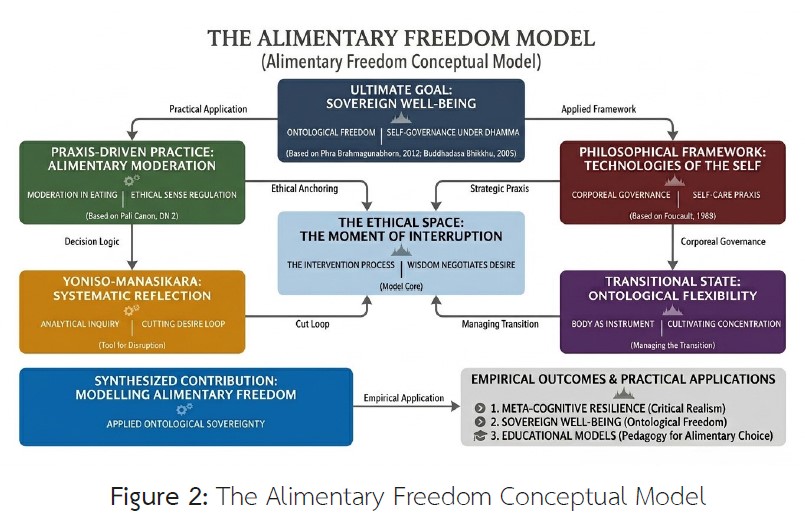
บทความวิชาการฉบับนี้มีวัตถุประสงค์เพื่อวิเคราะห์สถานะของการบริโภคอาหารในฐานะ "ปฏิบัติการทางจริยศาสตร์" โดยรื้อถอนวาทกรรมที่ลดทอนการกินให้เหลือเพียงกิจกรรมเชิงชีวภาพ สู่การทำความเข้าใจในฐานะ "เทคโนโลยีของตนเอง" ตามแนวทางพุทธปรัชญา การศึกษาวิจัยผ่านกรอบคิดโภชเนมัตตัญญุตา พบว่าวิกฤตสุขภาพและภาวะจำยอมต่อตัณหา มิได้เป็นเพียงปัญหาทางกายภาพ แต่คือสภาวะการสูญเสียอำนาจปกครองตนเอง การพิจารณาอาหารด้วยโยนิโสมนสิการ จึงทำหน้าที่เป็นเครื่องมือเชิงมโนทัศน์ในการกำจัด "เวทนาเก่า" และยับยั้ง "เวทนาใหม่" ข้อค้นพบชี้ให้เห็นว่า การบริโภคที่ผ่านการใคร่ครวญคือกระบวนการขัดเกลาภววิทยา ที่เปลี่ยนสถานะของร่างกายจาก "พื้นที่แห่งสัญชาตญาณ" สู่ "ฐานรากแห่งสมาธิและปัญญา" อันเป็นเงื่อนไขจำเป็นของสุขภาวะที่สมบูรณ์ตามนิยามพุทธจริยศาสตร์ที่มุ่งเน้นเสรีภาพภายในอย่างแท้จริง
Article Details
เอกสารอ้างอิง
Buddhadasa Bhikkhu. (2005). Anapanasati: Mindfulness with breathing. Dhammasapa.
Dewey, J. (1938). Logic: The theory of inquiry. Henry Holt and Company.
Foucault, M. (1988). Technologies of the self: A seminar with Michel Foucault. University of Massachusetts Press.
Mahachulalongkornrajavidyalaya University. (1996). Thai Tipiṭaka (Mahachulalongkornrajavidyalaya Edition). Mahachulalongkornrajavidyalaya University Press.
Phra Brahmagunabhorn (P.A. Payutto). (2012). Buddhadhamma: The laws of nature and their benefits to life. Mahachulalongkornrajavidyalaya University Press.
