
Humanitarian governance in Confucian philosophy
Article Sidebar
Main Article Content
Abstract
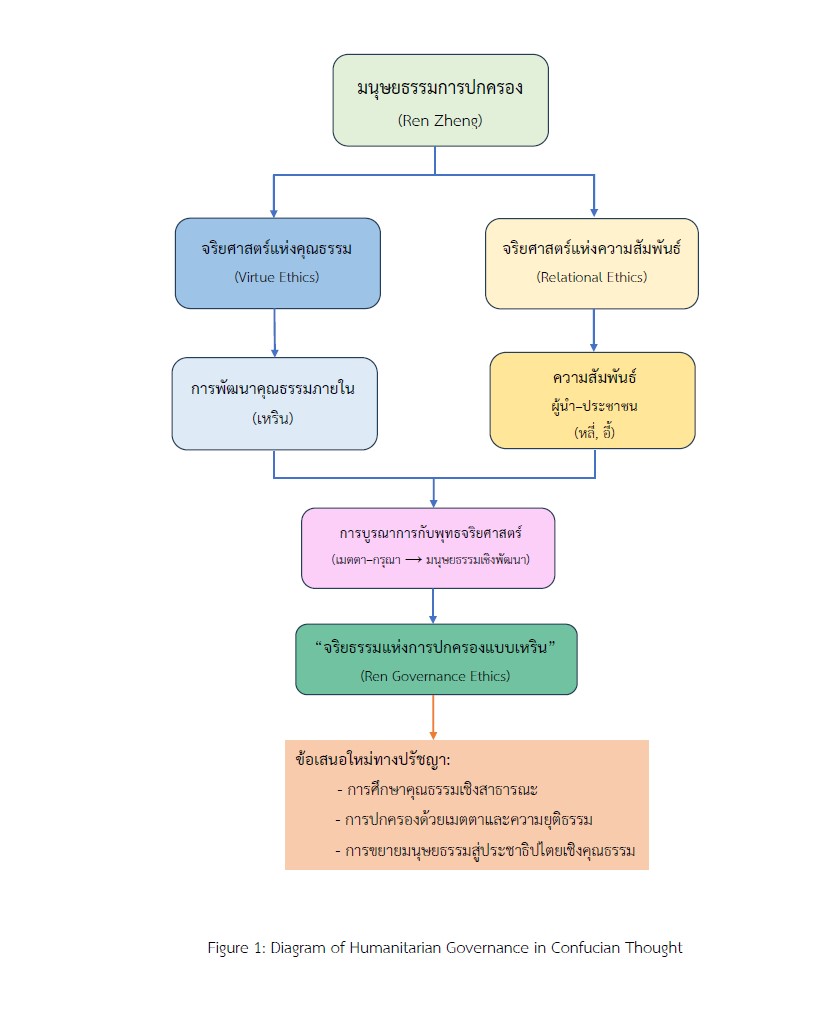
This academic article examines the concept of “Humanitarian governance” in Confucian philosophy, elucidating the intrinsic relationship between personal virtue and social order. The study reveals that Confucius regards Ren (仁) — humanity — as the supreme principle of coexistence, emphasizing moral cultivation through daily conduct as the foundation of a peaceful and just society. For Confucius, social harmony originates within the family, where filial piety and the maintenance of harmonious relationships constitute the essence of moral life.
Confucian philosophy, rather than orienting toward the afterlife, situates its ethical ideal in the creation of goodness within the present world. Emotional self-regulation, guided by conscience, is central to moral discipline, as emotions profoundly shape human behavior and communal relations. Confucius contends that Ren is not an innate state but a continuous process of self-cultivation—a synthesis of moral learning, disciplined practice, and appropriate conduct. Such cultivation transcends the individual, radiating outward to foster collective harmony, order, and sustainable moral flourishing within society.
Article Details
References
Aristotle. (2009). The Nicomachean Ethics (W. D. Ross, Trans.). Oxford University Press.
Bell, D. A. (2008). China’s new Confucianism: Politics and everyday life in a changing society. Princeton University Press.
Boonsuwan, K. (2004). Three eras of China (Revised ed.). Sukkapabjai Publishing.
Dokbua, F. (2012). Chinese philosophies (4th ed.). Sayam Publishing.
Fingarette, H. (1972). Confucius: The secular as sacred. Harper & Row.
Hall, D. L., & Ames, R. T. (1987). Thinking through Confucius. State University of New York Press.
Kabilsingh, C. (1989). Confucius: Philosophical and religious teachings. Journal of East Asian Studies, 2(1), 260.
Kaewsuwan, J. (2023). A study of the concept of filial piety in Confucianism through the Four Books. Humanities Academic Journal, 28(1), 263.
Kim, S. (2015). Human governance: A new vision for sustainable leadership. Routledge.
Legge, J. (1920). The Analects. Book II: 2. Ssu Shu: The Four Books. Hong Kong: The International Publication Society.
Li, X. L. (2018). Confucian humanism and global ethics. Beijing University Press.
Satha-anand, S. (2014). Reciprocal ethics in Confucian philosophy. Chuanan Publishing.
Satha-anand, S. (2019). Lunyu. Openbooks.
Tatchaviset, Y. (2023). The meaning of the “New Confucianism Movement”. Kasetsart University Journal of Chinese Studies, 8(2), 248.
Thai-khieow, C. (2024). Kongzi Jiayu: Confucian apocrypha. Goodhead Printing and Packaging Group.
PhraTerapon Nutthiko (Buathong). (2021). A comparative study of the concept of the sage in Theravāda Buddhist philosophy and Confucian philosophy [Master’s thesis, Mahachulalongkornrajavidyalaya University]. https://e-thesis.mcu.ac.th/thesis/4077
Tu, W. M. (1985). Confucian thought: Selfhood as creative transformation. State University of New York Press.
