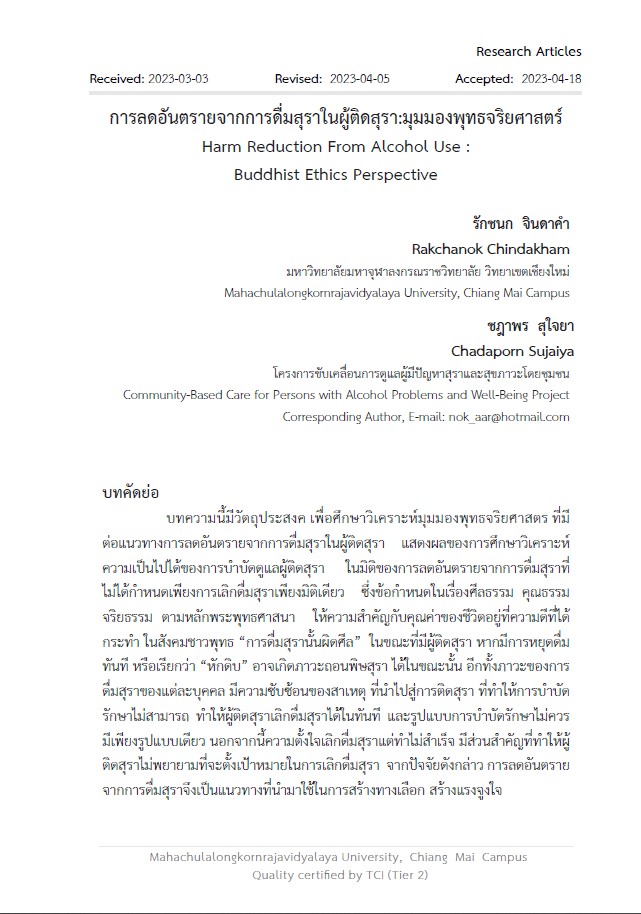
Harm Reduction From Alcohol Use : Buddhist Ethics Perspective
Article Sidebar
Main Article Content
Abstract
Abstract
This article has the objective will study and analyze the perspective of Buddhist ethics on guidelines for reducing harm from alcohol use in alcoholics. Displays the results of the analytical study. Possibilities of alcohol addiction treatment the dimension of harm reduction from alcohol use is not defined only in one dimension of abstinence. The requirements for morality, morality, ethics according to the principles of Buddhism. The importance of the value of life lies in the good deeds. in Buddhist society “Drinking alcohol is immoral” while there is an alcoholic. If you stop drinking immediately, or called "absorb", there may be a state of detoxification at that time. There is a complexity of causes. that leads to alcohol addiction which makes the treatment unable make alcoholics stop drinking alcohol immediately And the form of treatment should not be a single form. In addition, the intention to stop drinking alcohol, but was unsuccessful. It plays an important role in preventing alcoholics from trying to set goals to stop drinking. from such factors Reducing the harm from drinking alcohol is an approach that is used to create alternatives. Incentives for alcoholics to enter the treatment process Buddhist ethics perspectives will analyze ways and processes to reduce the harm from alcohol use. Can be an alternative to alcoholics more confident as well as helping people in the community to understand and reduce stigma change to support from people in the community society together.
Article Details
References
ศูนย์วิจัยปัญหาสุรา (ศวส.) หน่วยระบาดวิทยา คณะแพทยศาสตร์. (2559 – 2561). สถานการณ์การบริโภคเครื่องดื่ม แอลกอฮอล์ของประเทศไทยและของโลก.
โศภินสิริ ยุทธวิสุทธิ และคณะ. (2559). การปรับพฤติกรรมการดื่มสุราในชุมชน. วารสารวิทยาลัยพระปกเกล้า จันทบุรี. 27(2), 160-168.
จินตวีร์พร แว่นแก้ว. (2559). การพยาบาลผู้ป่วยโรคติดสุรา. วารสารการพยาบาลและการศึกษา. 9 (3), 10-19.
พันธุ์นภา กิตติรัตนไพบูลย์. (2561). แนวปฏิบัติการคัดกรองและบำบัดฟื้นฟูสภาพ ผู้มีปัญหาการดื่มสุรา กรมสุขภาพจิต กระทรวงสาธารณสุข. พิมพ์ครั้งที่ 2. นนทบุรี. สำนักพิมพ์อักษรกราฟฟิคแอนด์ดีไซน์.
จินตวีร์พร แว่นแก้ว. (2559). การพยาบาลผู้ป่วยโรคติดสุรา. วารสารการพยาบาลและการศึกษา. 9 (3), 10-19.
วรพล หนูนุ่น. (2556). การลดอันตราย (Harm reduction) และแนวทางการลดอุปสงค์ (Demand reduction) ยุทธศาสตร์ในการแก้ปัญหายาเสพติดในประเทศไทย. วารสารการพัฒนาสุขภาพชุมชน มหาวิทยาลัยขอนแก่น. 1(3), 1-16.
จิตรลดา อารีย์สันติชัย และอุษณีย์ พึ่งปาน. (19 มีนาคม 2562). ประเมินผลการดำเนินงานการลดอันตรายจากการใช้สารเสพติด ศูนย์วิจัยยาเสพติด วิทยาลัยวิทยาศาสตร์สาธารณสุข. สืบค้นเมื่อ 15 กุมภาพันธ์ 2566. จาก https://cads.in.th/cads/media /upload/1566876944-58-B.
แนวปฏิบัติการดูแลผู้ป่วยภาวะขาดสุราสำหรับสหวิชาชีพ. สถาบันบำบัดรักษาและฟื้นฟูผู้ติดยาเสพติด แห่งชาติบรมราชชนนี กรมการแพทย์. (2558). พิมพ์ครั้งที่ 2. ปทุมธานี. โรงพิมพ์แห่งจุฬาลงกรณ์มหาวิทยาลัย.
รายงานผลการดำเนินงาน. โครงการขับเคลื่อนการดูแลผู้มีปัญหาสุรา โดยกระบวนการมีส่วนร่วมของชุมชน. (2565). สมาคมฮักชุมชน.
สถาบันบำบัดรักษาและฟื้นฟูผู้ติดยาเสพติด แห่งชาติบรมราชชนนี กรมการแพทย์ (2558). แนวปฏิบัติการดูแลผู้ป่วยภาวะขาดสุราสำหรับสหวิชาชีพ. ปทุมธานี. โรงพิมพ์แห่งจุฬาลงกรณ์มหาวิทยาลัย.
พระครูวินัยธรอำนาจ พลปปญโญ และคณะ.(15 กันยายน 2559). พุทธจริยศาสตร์กับการพัฒนาการศึกษา เรื่องความจริง ความรู้ ความดี. สืบค้นเมื่อ 15 กุมภาพันธ์ 2566. จากfile:///C:/Users/User/Downloads/mcuojs,+Journal+manager.pdf.
