
ความงามกับความดีในศิลปะการแสดงโขนเงาพรหมจักร: การวิเคราะห์เชิงเปรียบเทียบระหว่างสุนทรียศาสตร์ของคานท์ และหลักบารมีในพุทธปรัชญา
Article Sidebar
Main Article Content
บทคัดย่อ
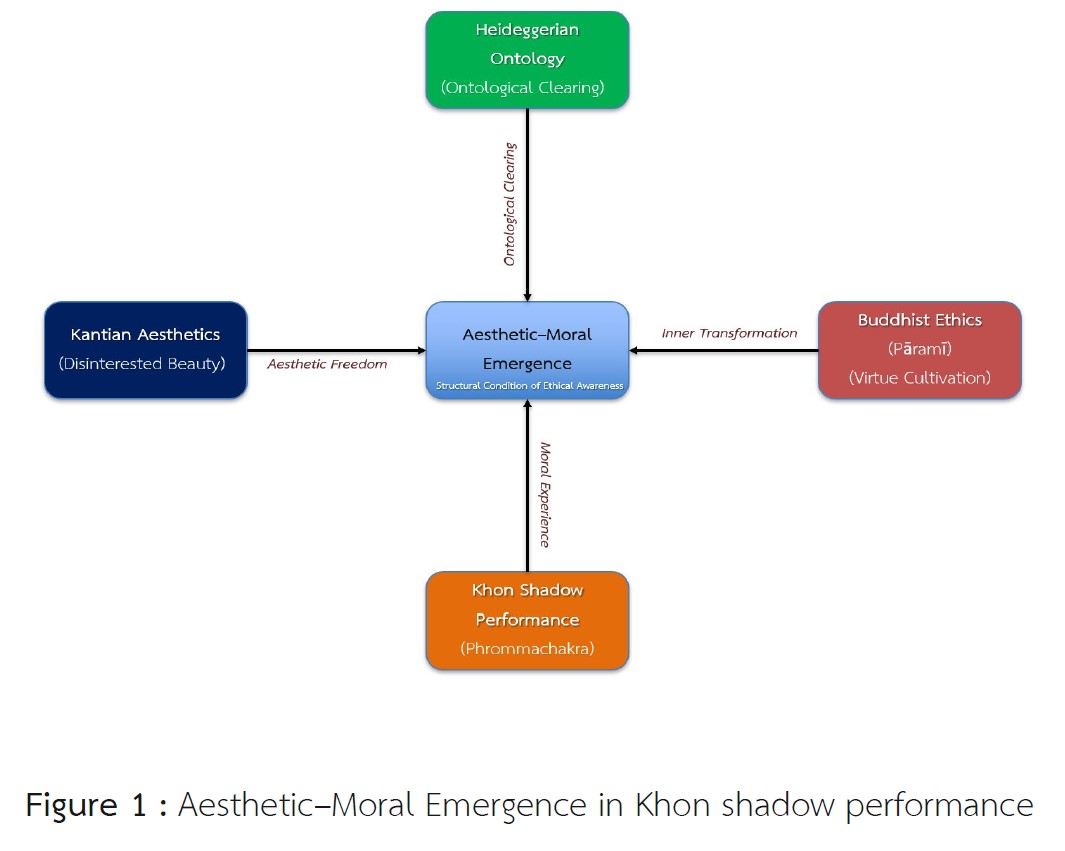
บทความวิจัยนี้มีวัตถุประสงค์เพื่อ 1) วิเคราะห์แนวคิดเรื่อง “ความงามแบบไร้ผลประโยชน์” ในสุนทรียศาสตร์ของอิมมานูเอล คานท์ และเปรียบเทียบกับหลักบารมีในพุทธปรัชญาเถรวาทซึ่งอธิบายความดีเชิงคุณธรรม และ 2) ศึกษาว่าศิลปะการแสดงโขนเงาเรื่องพรหมจักรสามารถสะท้อนหรือเชื่อมโยงความสัมพันธ์ระหว่างความงามและความดีได้อย่างไร งานวิจัยนี้เป็นการวิจัยเชิงคุณภาพ โดยใช้การวิเคราะห์เอกสารทางปรัชญา ควบคู่กับการวิเคราะห์กรณีศึกษาศิลปะการแสดงโขนเงาพรหมจักรในฐานะพื้นที่ทางสุนทรียะร่วมสมัย
ผลการศึกษาพบว่า แม้แนวคิดสุนทรียศาสตร์ของคานท์จะเน้นความงามในฐานะประสบการณ์ที่ไม่ขึ้นกับผลประโยชน์หรือจุดมุ่งหมายทางศีลธรรมโดยตรง แต่ในบริบทของศิลปะการแสดงที่มีรากฐานจากวรรณกรรมชาดกพุทธ ความงามสามารถทำหน้าที่เป็นเงื่อนไขเชิงสุนทรียะที่เปิดพื้นที่ให้ผู้ชมตระหนักและใคร่ครวญถึงคุณค่าทางศีลธรรมได้อย่างเสรี กล่าวอีกนัยหนึ่ง ศิลปะการแสดงโขนเงาพรหมจักรสะท้อนความเป็นไปได้ของการประสานกันระหว่าง “ความงาม” และ “ความดี” โดยไม่ทำให้ศิลปะกลายเป็นเพียงเครื่องมือทางศีลธรรม หากแต่ทำให้ความงามทำหน้าที่เป็นสื่อกลางแห่งการใคร่ครวญทางจริยธรรม งานวิจัยนี้จึงช่วยขยายบทสนทนาทางปรัชญาระหว่างสุนทรียศาสตร์ตะวันตกและพุทธปรัชญาในบริบทศิลปะการแสดงไทยร่วมสมัย
Article Details
เอกสารอ้างอิง
Allison, H. E. (2001). Kant’s theory of taste: A reading of the Critique of aesthetic judgment. Cambridge University Press.
Bodhi, B. (2005). In the Buddha’s words: An anthology of discourses from the Pali Canon. Wisdom Publications.
Carroll, N. (2001). Beyond aesthetics: Philosophical essays. Cambridge University Press.
Dewey, J. (2005). Art as experience. Perigee Books.
Dreyfus, H. L. (1991). Being-in-the-world: A commentary on Heidegger’s Being and Time, division I. MIT Press.
Guyer, P. (2005). Kant and the claims of taste (2nd ed.). Cambridge University Press.
Harvey, P. (2013). An introduction to Buddhism: Teachings, history and practices (2nd ed.). Cambridge University Press.
Heidegger, M. (1971). Poetry, language, thought (A. Hofstadter, Trans.). Harper & Row.
Kant, I. (2000). Critique of the power of judgment (P. Guyer & E. Matthews, Trans.). Cambridge University Press. (Original work published 1790)
Kant, I. (2012). Groundwork of the metaphysics of morals (M. Gregor & J. Timmermann, Trans.). Cambridge University Press. (Original work published 1785)
Keown, D. (2001). The nature of Buddhist ethics. Palgrave.
Mukdasakunpibān Pitisan. (2020). The creation process of Khon entitled Phrommachak [Doctoral dissertation, Khon Kaen University].
Nussbaum, M. C. (1990). Love’s knowledge: Essays on philosophy and literature. Oxford University Press.
Phra Brahmagunabhorn (P. A. Payutto). (2016). Buddhist economics: A middle way for the market place. Buddhadhamma Foundation.
Schopenhauer, A. (1969). The world as will and representation (E. F. J. Payne, Trans., Vol. 1). Dover Publications. (Original work published 1818)
Shusterman, R. (2000). Pragmatist aesthetics: Living beauty, rethinking art (2nd ed.). Rowman & Littlefield.
