
การสร้างอัตลักษณ์ทางวัฒนธรรม ที่ปรากฏในพิธีกรรมการสวดเบิกล้านนา
Article Sidebar
Main Article Content
บทคัดย่อ
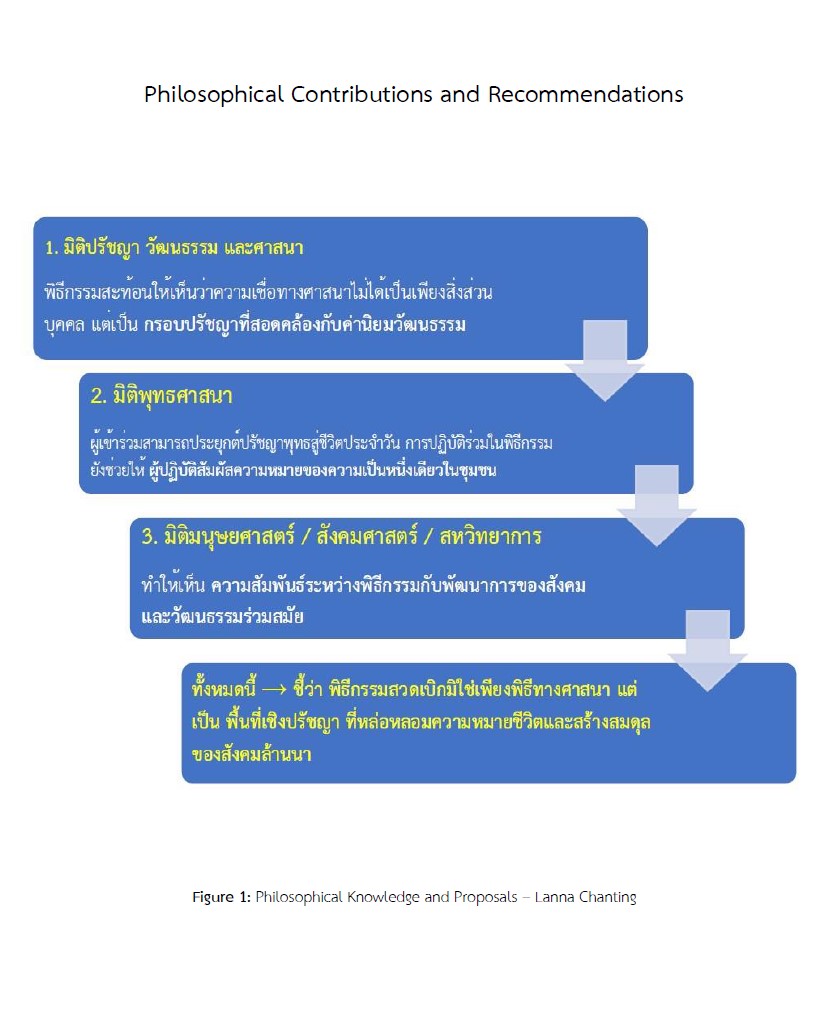
บทความนี้มุ่งวิเคราะห์ พิธีกรรมการสวดเบิกล้านนา ในฐานะกระบวนการสร้าง อัตลักษณ์ทางวัฒนธรรม ของชุมชนล้านนา โดยใช้วิธีการวิจัยเชิงคุณภาพผ่านการศึกษาวรรณกรรม การตีความ และการสังเคราะห์เชิงปรัชญา เพื่อสำรวจความหมายและบทบาทของพิธีกรรมต่อสังคม ผลการศึกษาพบว่า พิธีกรรมสวดเบิกมีบทบาทสำคัญต่อการสร้างอัตลักษณ์ล้านนาในสี่มิติ ได้แก่ 1) ศาสนาและพุทธปรัชญาแบบล้านนา 2) ความเป็นท้องถิ่นและชุมชน 3) ภาษาและการสื่อสารเชิงวัฒนธรรม 4) คีตศิลป์และศิลปะการขับร้องล้านนา
พิธีกรรมดังกล่าวสะท้อนความเชื่อดั้งเดิมและปรับตัวเข้ากับบริบทโลกาภิวัตน์ เชื่อมโยงการปฏิบัติทางจิตวิญญาณเข้ากับการดำรงชีวิตของชุมชน เมื่อพิจารณาผ่านกรอบพุทธปรัชญา เช่น อนัตตา ไตรลักษณ์ ปฏิจจสมุปบาท และสุญญตา จะเห็นว่าอัตลักษณ์เป็นสิ่งพลวัต เกิดจากความสัมพันธ์ระหว่างปัจจัยต่าง ๆ สวดเบิกจึงเป็นทั้งพิธีกรรมทางศาสนาและการปฏิบัติปรัชญา ที่ธำรงคุณค่าทางวัฒนธรรมและเชื่อมโยงกับการแสวงหาความหมายชีวิตร่วมสมัย
Article Details
เอกสารอ้างอิง
Apinya, F. (2000). Identity and self-construction in society. Thammasat University Press.
Boonthan, R. (2006). Lanna opening chant rituals. Chiang Mai University Press.
Buckingham, D. (2008). Youth, identity, and digital media. Cambridge, MA: MIT Press.
Chen, G. M. (2014). The impact of globalization on cultural identity. Journal of Global Studies, 12(2), 45-59.
Duanwisets, N. (2021). The chanting-opening ritual and Lanna culture. Chiang Mai University Press.
Fearon, J. D. (1999). What is identity (as we now use the word)? Stanford University, Department of Political Science.
Hall, S. (1989). Cultural identity and diaspora. In J. Rutherford (Ed.), Identity: Community, culture, difference (pp. 222-237). London: Lawrence & Wishart.
Hall, S. (1996). Questions of cultural identity. London: SAGE Publications.
Harvey, P. (2013). An introduction to Buddhism: Teachings, history, and practices (2nd ed.). Cambridge: Cambridge University Press.
Jaitrong, P. (2018). Cultural identity of the four ethnic groups in Sisaket Province. Journal of Cultural Studies, 8(1), 15-32.
Leary, M. R., & Tangney, J. P. (2012). Handbook of self and identity (2nd ed.). New York, NY: Guilford Press.
Phradhammapitaka (P.A. Payutto). (2000a). Buddhist philosophy and identity. Mahachulalongkornrajavidyalaya University.
Phradhammapitaka (P.A. Payutto). (2000b). Anattā: Concepts and interpretations in Buddhism. Mahachulalongkornrajavidyalaya University Press.
Phrapalad Somsak Samahito. (2021). Lanna music and ritual arts. Hariphunchai Temple Publishing.
Ruantun, K. (2018). Promoting Buddhist Lanna cultural identity: A case study of Lampang Province. Journal of Humanities, 12(2), 45-60.
Setthakul, R. (2017). Lanna music and rituals: A study of musical arts in folk culture. Chiang Mai University Press.
Singh, A. (2022). Popular culture and youth identity formation: Case studies from global media. International Journal of Cultural Studies, 25(2), 151-170.
Stets, J. E., & Burke, P. J. (2000). Identity theory and social identity theory. Social Psychology Quarterly, 63(3), 224-237.
Zhang, L. (2019). Cultural identity and cross-cultural education in international schools under China’s Belt and Road Initiative. Asian Education Studies, 4(1), 33-47.
