มนุษยธรรมการปกครองในปรัชญาขงจื๊อ
Article Sidebar
Main Article Content
บทคัดย่อ
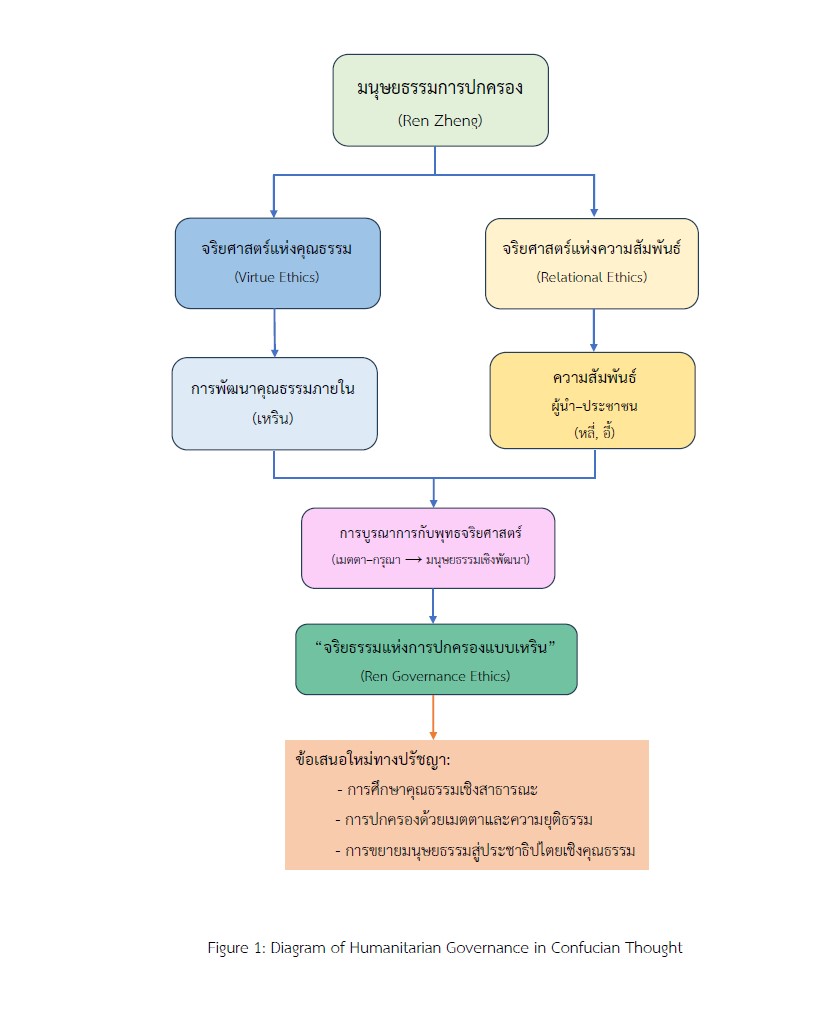
บทความวิชาการนี้มีวัตถุประสงค์เพื่อศึกษาวิเคราะห์แนวคิดเรื่อง “มนุษยธรรมการปกครอง” ในปรัชญาขงจื๊อ ซึ่งสะท้อนการเชื่อมโยงระหว่างจริยธรรมส่วนบุคคลกับระเบียบทางสังคม ผลการศึกษาพบว่า ขงจื๊อมองมนุษยธรรม (เหริน – 仁) ว่าเป็นหลักการสูงสุดแห่งการดำรงอยู่ร่วมกัน โดยเน้นการบ่มเพาะคุณธรรมผ่านการประพฤติปฏิบัติในชีวิตประจำวัน อันเป็นรากฐานของสังคมที่สงบสุขและเป็นธรรม การสร้างระเบียบในสังคมเริ่มต้นจากความกลมกลืนในครอบครัว ซึ่งความกตัญญูและการธำรงสัมพันธ์อันดีระหว่างบุพการีและบุตรถือเป็นหัวใจของการอยู่ร่วมกันอย่างมีคุณค่า
ปรัชญาขงจื๊อมิได้มุ่งสู่โลกหน้า แต่ให้ความสำคัญกับ การสร้างสรรค์ความดีงามในปัจจุบัน ผ่านการควบคุมอารมณ์และการใช้มโนธรรมเป็นหลักนำชีวิต เพราะอารมณ์คือพลังขับเคลื่อนที่มีผลต่อพฤติกรรมและความสัมพันธ์ในระดับบุคคลและสังคม ขงจื๊อชี้ว่า “มนุษยธรรม” มิใช่ภาวะที่เกิดขึ้นโดยธรรมชาติ แต่เป็น กระบวนการพัฒนาตนอย่างต่อเนื่อง ผ่านการเรียนรู้ การฝึกฝนทางคุณธรรม ความรู้ และการปฏิบัติอย่างเหมาะสม ซึ่งไม่เพียงยกระดับจิตใจของปัจเจกบุคคล แต่ยังส่งอิทธิพลเชิงบวกต่อสังคมโดยรวม นำไปสู่ความกลมกลืน ความสงบ และระเบียบในสังคมในที่สุด
Article Details
เอกสารอ้างอิง
Aristotle. (2009). The Nicomachean Ethics (W. D. Ross, Trans.). Oxford University Press.
Bell, D. A. (2008). China’s new Confucianism: Politics and everyday life in a changing society. Princeton University Press.
Boonsuwan, K. (2004). Three eras of China (Revised ed.). Sukkapabjai Publishing.
Dokbua, F. (2012). Chinese philosophies (4th ed.). Sayam Publishing.
Fingarette, H. (1972). Confucius: The secular as sacred. Harper & Row.
Hall, D. L., & Ames, R. T. (1987). Thinking through Confucius. State University of New York Press.
Kabilsingh, C. (1989). Confucius: Philosophical and religious teachings. Journal of East Asian Studies, 2(1), 260.
Kaewsuwan, J. (2023). A study of the concept of filial piety in Confucianism through the Four Books. Humanities Academic Journal, 28(1), 263.
Kim, S. (2015). Human governance: A new vision for sustainable leadership. Routledge.
Legge, J. (1920). The Analects. Book II: 2. Ssu Shu: The Four Books. Hong Kong: The International Publication Society.
Li, X. L. (2018). Confucian humanism and global ethics. Beijing University Press.
Satha-anand, S. (2014). Reciprocal ethics in Confucian philosophy. Chuanan Publishing.
Satha-anand, S. (2019). Lunyu. Openbooks.
Tatchaviset, Y. (2023). The meaning of the “New Confucianism Movement”. Kasetsart University Journal of Chinese Studies, 8(2), 248.
Thai-khieow, C. (2024). Kongzi Jiayu: Confucian apocrypha. Goodhead Printing and Packaging Group.
PhraTerapon Nutthiko (Buathong). (2021). A comparative study of the concept of the sage in Theravāda Buddhist philosophy and Confucian philosophy [Master’s thesis, Mahachulalongkornrajavidyalaya University]. https://e-thesis.mcu.ac.th/thesis/4077
Tu, W. M. (1985). Confucian thought: Selfhood as creative transformation. State University of New York Press.
