Physicochemical Properties and Nutritional Values of Ja Mongkut in Samut Songkhram Province
Article Sidebar
Main Article Content
Abstract
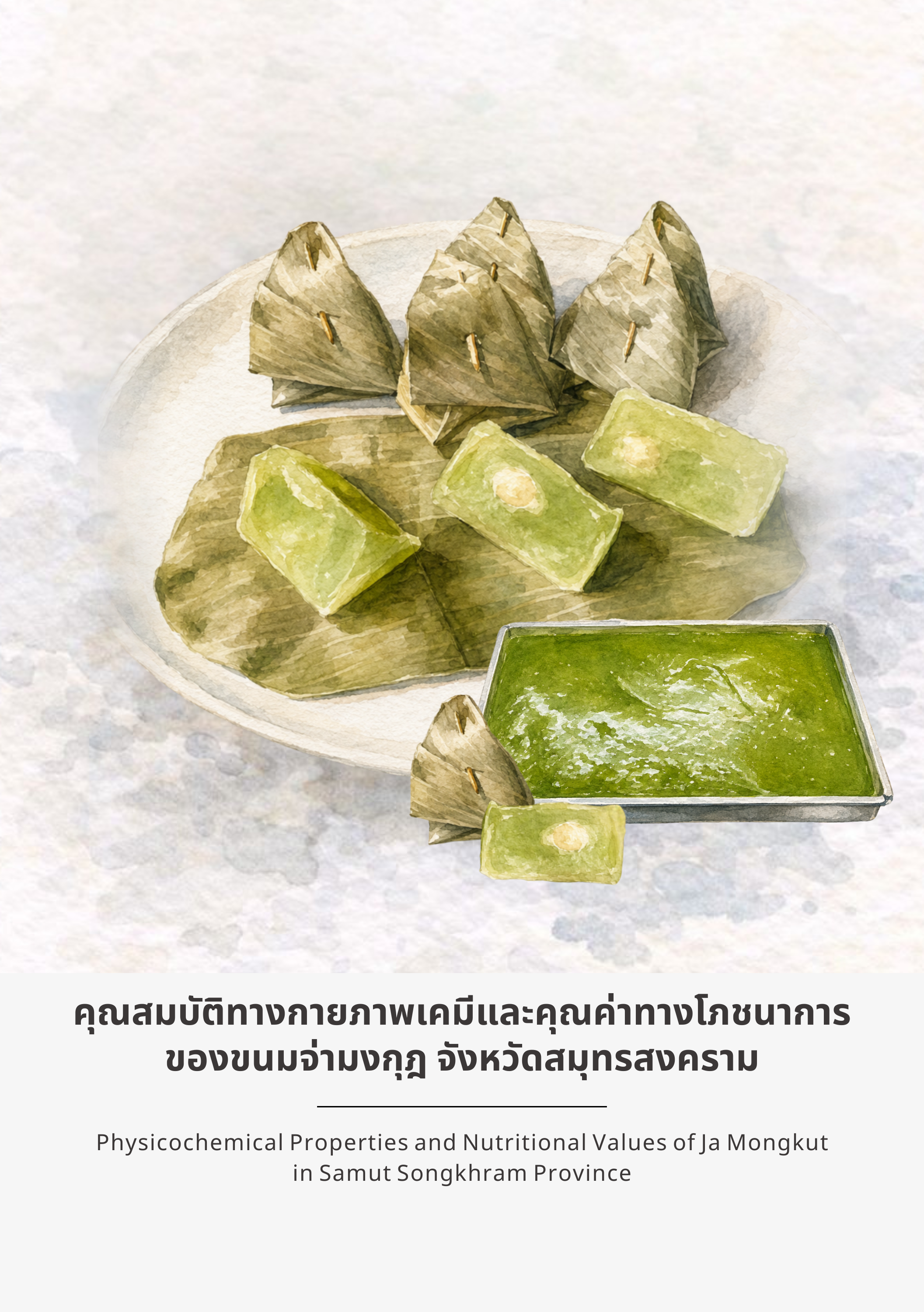
This research aimed to investigate the effects of three different drying durations at 70°C or four drying durations (0 1 2 and 3 h) on the physical and chemical properties of Ja Mongkut, a traditional dessert unique to Samut Songkhram Province, and to analyze its nutritional value. The results demonstrated that the hardness of Ja Mongkut dessert decreased from 0.23 N. at the beginning of the drying process to 0.12 N. after 1 h of hot-air drying, followed by a slight increase to 0.15 N after 3 h. Nevertheless, the final hardness remained lower than the initial value. Cohesiveness continuously declined with increasing drying time, decreasing from 0.77 to 0.24 after 3 h. This reduction was attributed to moisture loss and the structural reorganization of the product matrix during the hot-air drying process. The water activity (aw) ranged from 0.76 to 0.77, indicating conditions that may inhibit the growth of spoilage microorganisms and thereby contribute to improved product stability. Nutritional analysis revealed that the dessert provided 111.24 kcal per serving and was predominantly composed of carbohydrates (17.76 g), including sugars (13.53 g), together with fat (4.14 g) and protein (0.78 g). Based on its nutritional profile, a serving size of no more than three pieces (30 g), corresponding to an energy intake below 200 kcal per snack occasion, is recommended. The findings of this study provide a valuable academic foundation for future research and the development of food innovations. These findings are expected to contribute to advancements in food science and technology while supporting long-term food sustainability.
Article Details
References
กนกวรรณ ปุณณะตระกูล, วีระศักดิ์ ศรีลารัตน์ และณัฐสิมา โทขันธ์. (2563).การพัฒนาผลิตภัณฑ์ขนมอาลัวจากน้ำนมข้าวกล้อง. วารสารวิจัยและพัฒนา วไลยอลงกรณ์ ในพระบรมราชูปถัมภ์ สาขาวิทยาศาสตร์และเทคโนโลยี, 15(3), 1-9.
กล้าณรงค์ ศรีรอต. (2521). เทคโนโลยีน้ำตาล : คุณสมบัติและการใช้ในอุตสาหกรรม. มหาวิทยาลัยเกษตรศาสตร์.
จิราภรณ์ บุราคร, ปรานต์ ปิ่นทอง, ทรงพร ไกรสิทธิ์, พิมพร พลายจันทร์, ณัฐชา ศิริวาริน และมนทกานติ์ เอี่ยมแก้ว. (2567). การพัฒนาผลิตภัณฑ์ขนมอาลัวโดยการใช้แป้งข้าวทับทิมชุมแพทดแทนแป้งสาลีบางส่วน.วารสารวิทยาศาสตร์ มหาวิทยาลัยขอนแก่น, 52(2), 170-181.
ธนวิทย์ ลายิ้ม. (2566). ขนมไทย : วิวัฒนาการและการประยุกต์เพื่อสุขภาพ. วารสารกระแสวัฒนธรรม, 23(44), 70-84.
นุชนารถ ทรัพย์พาณิชย์. (2545). Water Activity กับการควบคุมอายุการเก็บรักษาผลิตภัณฑ์อาหาร. วารสารจาร์พา, 9(68), 48-51.
บุณยาพร บุญแก้ว, สุพรรษา สวัสดิ์กระวี, ดวงกมล แสงธีรกิจ และกิตติยา วงค์สกุลสุขกูล และปัทมาภรณ์ เจริญนนท์. (2569). ผลของการใช้น้ำส้มซ่าและเสริมเปลือกส้มซ่าในผลิตภัณฑ์วุ้นกรอบต่อคุณภาพทางกายภาพและการยอมรับของผู้บริโภค. วารสารคหกรรมศาสตร์และวัฒนธรรมอย่างยั่งยืน, 8(1), 33-46.
ปัทมาภรณ์ เจริญนนท์, จุฑาวรรณ นวลจันทร์คง, กุสุมาศ ตันไชย และศกุนตาล์ มานะกล้า. (2566). คุณสมบตัิทางเคมีกายภาพและคุณค่าทางโภชนาการ ของผลิตภัณฑ์คุกกี้โดยใช้แป้งบักวีทและแป้งควินัว. วารสารวัฒนธรรมอาหารไทย, 5(2), 30-39.
พิมลนาฏ วิธุรัติ. (2564). ขนมอาลัวกุหลาบพลังงานต่ำจากมะพร้าวน้ำหอม. วารสารสังคมศาสตร์และมนุษยศาสตร์แห่งรัตนโกสินทร์, 3(3), 35-46.
รตนพร บรรทัด, เพ็ญนภา ลิ่มวัน, ปาริสุทธิ์ เฉลิมชัยวัฒน์ และดวงกมล แสงธีรกิจ. (2566). การพัฒนาผลิตภัณฑ์เมี่ยงคำชนิดแท่งเพื่อสุขภาพ. วารสารวิจัย มหาวิทยาลัยเทคโนโลยีราชมงคลศรีวิชัย, 15(1), 74-90.
รัตนา อัตตปัญโญ, ยุพารัตน์ โพธิเศษ, คุณากร ขัติศรี และเจิมขวัญ สังข์สุวรรณ. (2560). การพัฒนากระบวนการผลิตกาละแมเพื่อยืดอายุการเก็บรักษา. วารสารวิทยาศาสตร์และเทคโนโลยี, 25(1), 56-65.
วีรยุทธ เปลี่ยนสำโรง, จุฑามาศ พีรพัชระ และเปรมระพี อุยมาวีรหิรัญ. (2569). ภูมิปัญญาท้องถิ่นการผลิตขนมจ่ามุงกฎ จังหวัดสมุทรสงคราม. วารสารศิลปศาสตร์ราชมงคลสุวรรณภูมิ, 8(1), 213-225.
วีรยุทธ เปลี่ยนสำโรง. (2568). ภูมิปัญญาท้องถิ่นการผลิตขนมจ่ามงกุฎ จังหวัดสมุทรสงคราม. [วิทยานิพนธ์ปริญญามหาบัณฑิต ไม่ได้ตีพิมพ์]. มหาวิทยาลัยเทคโนโลยีราชมงคล พระนคร.
พิมพ์เพ็ญ พรเฉลิมพงศ์ และนิธิยา รัตนาปนนท์. (2569, สิงหาคม 2). Retrogradation/รีโทรเกรเดชัน. https://www.foodnetworksolution.com/wiki/word/0591/retrogradation
สำนักงานกองทุนสนับสนุนการสร้างเสริมสุขภาพ. (2564, มิถุนายน 29). สำรวจพฤติกรรมสุขภาพคนไทย ลดปัจจัยเสี่ยง NCDs. https://www.thaihealth.or.th/สำรวจพฤติกรรมสุขภาพคนไทย.
สุมณฑา วัฒนสินธุ์ (2549). จุลชีววิทยาทางอาหาร. โรงพิมพ์มหาวิทยาลัยธรรมศาสตร์.
อาฒยา สันตะกุล, อบเชย วงศ์ทอง, กาญจนา ลุศนันทน์ และสมบัติ ขอทวีวัฒนา. (2549, 30 มกราคม- 2 กุมภาพันธ์). การพัฒนาขนมอาลัวให้ได้สูตรมาตรฐาน [เอกสารนำเสนอ]. การประชุมทางวิชาการของมหาวิทยาลัยเกษตรศาสตร์ ครั้งที่ 44. มหาวิทยาลัยเกษตรศาสตร์ กรุงเทพฯ, ประเทศไทย.
Bean, M. M. & Setser, C. S. (1992). Polysaccharides, sugars, and sweeteners. In J. Bowers (Ed.), Food theory and applications (2nd ed., pp. 69–198). Macmillan Publishing Company
Orikasa, T., Wu, L. & Tagawa, A. (2008). Drying characteristics of kiwifruit during hot air drying. Journal of Food Engineering, 85(2), 303-308
Wang, R. & Hartel, R.W. (2022). Citric acid and heating on gelatin hydrolysis and gelation in confectionery gels. Food Hydrocolloids, 129, 107642. https://doi.org/https://doi.org/10.1016/j.foodhyd.2022.107642.
Zobel, H. F. & Stephen, A. M. (1995). Starch: Structure, analysis, and application. In A. M. Stephen (Ed.), Food polysaccharides and their applications (pp. 9–16). Marcel Dekker.
