ผลของการลดปริมาณน้ำตาลไอซิ่งต่อคุณภาพทางกายภาพ เคมี และอายุการเก็บรักษาคุกกี้ตูเลจากแป้งข้าวไรซ์เบอร์รี่
Article Sidebar
Main Article Content
บทคัดย่อ
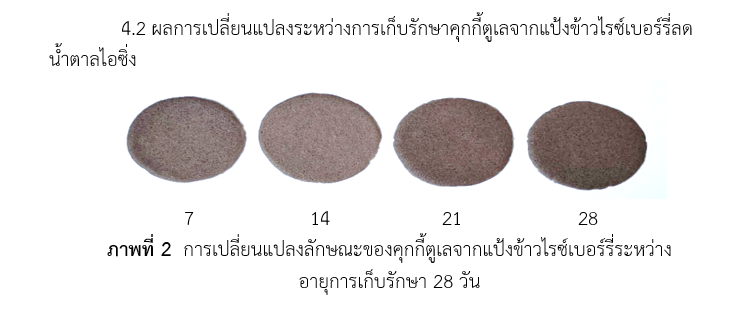
งานวิจัยนี้มีวัตถุประสงค์เพื่อศึกษาผลการลดปริมาณน้ำตาลไอซิ่งในคุกกี้ตูเลจากแป้งข้าวไรซ์เบอร์รี่ต่อคุณภาพทางกายภาพ เคมี และอายุการเก็บรักษา โดยแปรการลดปริมาณน้ำตาลไอซิ่ง 4 ระดับ คือ ร้อยละ 0 (ควบคุม) 30 35 และ 40 ตามลำดับ พบว่า คุกกี้ตูเลจากแป้งข้าวไรซ์เบอร์รี่ที่ลดปริมาณน้ำตาลไอซิ่งเพิ่มขึ้นมีค่าความแข็ง ค่า L* และ a* ลดลง (p≤0.05) ค่าความกว้าง ความหนา อัตราการแผ่กระจายเพิ่มขึ้นเมื่อลดน้ำตาลไอซิ่งร้อยละ 30 ขึ้นไป การลดปริมาณน้ำตาลไอซิ่งส่งผลให้ปริมาณความชื้นและคาร์โบไฮเดรตลดลง ปริมาณโปรตีน และไขมันสูงขึ้น ตัวอย่างคุกกี้ตูเลจากแป้งข้าวไรซ์เบอร์รี่ที่ลดปริมาณน้ำตาลไอซิ่ง ร้อยละ 30 มีค่าสีและลักษณะเนื้อสัมผัส ซึ่งเป็นปัจจัยสำคัญที่ส่งผลต่อความชอบของผู้บริโภคใกล้เคียงกับสูตรควบคุมมากที่สุด คุกกี้ตูเลจากแป้งข้าวไรซ์เบอร์รี่ที่บรรจุในถุงพลาสติกชนิด โพลิโพรพิลีนที่อุณหภูมิ 28±2 องศาเซลเซียส นาน 28 วัน มีปริมาณน้ำอิสระเท่ากับ 0.30 ซึ่งไม่เกินที่มาตรฐานกำหนด และมีค่าความแข็งลดลงเมื่อระยะเวลาการเก็บรักษานานขึ้น แต่เมื่อสัมผัสด้วยมือพบว่า คุกกี้ตูเลมีความกรอบลดลง นิ่มมากขึ้นในวันที่ 14 ดังนั้นระยะเวลาการเก็บรักษาคุกกี้ตูเลจากแป้งข้าวไรซ์เบอร์รี่ที่ลดปริมาณน้ำตาลไอซิ่งคือ 14 วัน
Article Details
เอกสารอ้างอิง
กมลรัตน์ หนูสวี, คณิต เขียววิชัย และวรรณวิสา บุญมาก. (2564). การศึกษาความรู้ความเข้าใจเกี่ยวกับการบริโภคอาหารเพื่อสุขภาพของนักศึกษาระดับปริญญาตรี มหาวิทยาลัยศิลปากร (รายงานผลการวิจัย). มหาวิทยาลัยศิลปากร.
จิตติกร สงจันทร์, ชญาภัทร์ กี่อาริโย และน้อมจิตต์ สุธีบุตร. (2564). การพัฒนาผลิตภัณฑ์คุกกี้เนยสดเสริมโปรตีนจากตัวด้วงต้นสาคู. วารสารพัฒนาเทคนิคศึกษา, 37(132), 130-40.
ช่อลัดดา เที่ยงพุก. (2560). น้ำตาลทราย ความหวานคู่พลังงานหลากหลายผลิตภัณฑ์. วารสารอาหาร, 47(4), 48-50.
ธิดารัตน์ เปรมประสพโชค, ศศิธร จานเก่า และประไพรภัส ทาน้อย. (2558, 3-6 กุมภาพันธ์). การทดแทนน้ำตาลทรายในคุกกี้ด้วยกล้วยน้ำว้า [เอกสารนำเสนอ]. การประชุมวิชาการของมหาวิทยาลัยเกษตรศาสตร์ ครั้งที่ 53, มหาวิทยาลัยเกษตรศาสตร์ กรุงเทพฯ, ประเทศไทย.
ธีรนุช ฉายศิริโชค. (2547). คุกกี้ (Cookies) (พิมพ์ครั้งที่ 2). สำนักพิมพ์ บริษัท นาคา อินเทอร์มีเดีย จำกัด.
นภัสสร พยรรตาคม. (2562). การพัฒนาผลิตภัณฑ์แครกเกอร์จากข้าวไรซ์เบอร์รี่เสริมแป้งมะละกอดิบ [วิทยานิพนธ์ปริญญามหาบัณฑิต]. จุฬาลงกรณ์มหาวิทยาลัย.
นวพร หงส์พันธุ์, กีรติ เงินสมบัติ และอินทุพร รัตนพิบูลย์. (2562). การพัฒนาผลิตภัณฑ์ขนมอาลัวจากแป้งข้าวไรซ์เบอร์รี่. วารสารวิทยาศาสตร์บูรพา, 24(2), 782-794.
ปิยนุสร์ น้อยด้วง และนคร บรรดิจ. (2558). การใช้มอลทิทอลและซูคราโลสในการผลิตคุกกี้เนยแคลอรี่ต่ำ. วารสารวิชาการ ฉบับวิทยาศาสตร์และเทคโนโลยี สมาคมสถาบัน อุดมศึกษาเอกชนแห่งประเทศไทย, 4(2), 42-51.
พจนีย์ บุญนา, อภิญญา มานะโรจน์, วรลักษณ์ ปัญญาธิติพงศ์ และศุภัคษร มาแสวง. (2565). ผลของปริมาณน้ำตาลต่อสมบัติทางกายภาพและประสาทสัมผัสการยอมรับของผู้บริโภคของผลิตภัณฑ์ขนมผิง. Journal of Applied Research on Science and Technology (JARST), 21(2), 14-25.
พรรัตน์ สินชัยพานิช, กุลรภัส บุตรพงษ์, ศศพินทุ์ ดิษนิล และเรณู ทวิชชาติวิทยากุล. (2560). ผลของแป้งข้าวไรซ์เบอร์รี่ที่ใช้ทดแทนแป้งสาลีในบราวนี่:เนื้อสัมผัสและลักษณะคุณภาพ. วารสารวิจัย มสด สาขามนุษยศาสตร์และสังคมศาสตร์, 10(2), 69-80.
รสพร เจียมจริยธรรม, พรรณภัทร พรหมเพ็ญ และบงกช บุญบูรพงศ์. (2563). การพัฒนาผลิตภัณฑ์ตูเลจากแป้งกล้วย. วารสารวิทยาศาสตร์บูรพา, 25(2), 464-481.
วัฒนา วิริวุฒิกร. (2567). การพัฒนาผลิตภัณฑ์แป้งโรตีกรอบโดยใช้แป้งข้าวไรซ์เบอร์รี่ ทดแทนแป้งสาลีอเนกประสงค์. วารสารวิทยาศาสตร์บูรพา, 29(1), 160-180.
วรรธนา อินทวงค์ และธนภพ โสตรโยม. (2564). การใช้เวย์โปรตีนเสริมในคุกกี้เนยสดแป้งเมล็ดบัว. วารสารเทคโนโลยีคหกรรมศาสตร์ มหาวิทยาลัยเทคโนโลยีราชมงคลพระนคร, 3(1), 13-24.
สุพิชญา คำคม. (2563). ผลของแป้งข้าวไรซ์เบอรี่ต่อสมบัติทางเคมีกายภาพและฤทธิ์การต้านอนุมูลอิสระของผลิตภัณฑ์ซาลาเปา. วารสารวิทยาศาสตร์และเทคโนโลยี, 28(11), 2025-2038.
อมรรัตน์ ถนนแก้ว และปาจรีย์ เรืองคล้าย. (2559). ผลของน้ำมันทอดต่อการเปลี่ยนแปลงคุณภาพของขนมลาในระหว่างการเก็บรักษาที่อุณหภูมิห้อง. วารสารวิจัยมหาวิทยา-ลัยเทคโนโลยีราชมงคลศรีวิชัย, 8(2), 203-218.
อารี น้อยสำราญ, โสมรัศมิ์ กล่ำกล่อมจิตร์, ชุติพร วุฒิ และอนุชา ลีฬหาพงศธร. (2564). ผลิตภัณฑ์ปั้นสิบเสริมแป้งข้าวไรซ์เบอร์รี่ไส้สับปะรด. วารสารวิทยาลัยดุสิตธานี, 15(1), 223-235.
AOAC. (2000). Official Methods of Analysis of the Association of Official Analytical Chemists. (21nd ed.). Gaithersburd, MD, USA Association of Analytical Communities.
Ashwath Kumar, K. & Sudha, M. L. (2021). Effect of fat and sugar replacement on rheological, textural and nutritional characteristics of multigrain cookies. Journal of food science and technology, 58(7), 2630–2640. https://doi.org/10.1007/s13197-020-04769-9
Awol, S.M., Kuyu, C.G., Bereka, T.Y. & Abamecha, N. (2024). Physicochemical stability, microbial growth and sensory quality of refined wheat flour as affected by packaging materials during storage. Journal of Stored Products Research, 105, 102217.
Dana, H. & Sonia, A. (2024). Substituting sugar in pastry and bakery products with functional ingredients. Applied Sciences, 14(18), 8563. https://doi.org/10.3390/app14188563
Hussain, S., Alamri, M. S., Mohamed, A. A., Ibraheem, M. A., Qasem, A. A. A., Shamlan, G. & Ababtain, I. A. (2022). Dough performance and quality evaluation of cookies prepared from flour blends containing cactus (Opuntia ficus-indica) and Acacia (Acacia seyal) Gums. Molecules, 27(21), 7217. https://doi.org/10.3390/molecules27217217
Jahromi, S.F., Varidi, M.J., Varidi, M. & Nooshkam, M. (2024). Reduced fat and sugar cakes developed by protein/polysaccharide /licorice extract ternary gel-like foams. Food Science and Technology, 194, 115790. https://doi.org/10.1016/j.lwt.2024.115790
Jain, S. & Sree, P.K.M. (2017). Physicochemical and organoleptic properties of cookies made using tender coconut pulp as a fat replacer. Asian Journal of Science and Technology, 8(12), 7089-7091.
Kardas, M., Rakuła, M., Kołodziejczyk, A. & Staśkiewicz-Bartecka, W. (2024). Consumer preferences, sensory evaluation, and color analysis of beetroot and tomato juices: implications for product development and marketing in health-promoting beverages. Foods, 13(24), 4059. https://doi.org/10.3390/foods13244059
Laokuldilok, S., Surin, S. & Damrongwattanakool, N. (2021). Effect of using riceberry flour and xanthan gum on physical properties and estimated glycemic index of steamed rice cakes: optimization by D-optimal mixture design approach. Journal of Food Science and Technology, 59(2), 724-734.
Liu, Y., Cheng, J., Wan, L. & Chen, W. (2023). Associations between total and added sugar intake and diabetes among chinese adults: The role of body mass index. Nutrients, 15(14), 3274. https://doi.org/10.3390/nu15143274
Rippe, J.M. & Angelopoulos, T.J. (2016). Relationship between added sugars consumption and chronic disease risk factors: current understanding. Nutrients, 8(11), 1-19. https://doi.org/10.3390/nu8110697
Suo, X., Tagliasco, M., Bonfini, M., Bonfili, L., Araiza, O.M., Baggio, A., Eleuteri, A.M., Pellegrini, N. & Vittadini, E. (2025). Development of sugar- and fat-reduced pulse cookies with improved predicted glycemic behavior. Applied Food Research, 5(1), 1-11.
The sugar association. (2017). Sugar’s functional roles in cooking & food preparation. The sugar association.
Van der Sman, R.G.M. & Renzetti, S. (2019). Understanding functionality of sucrose in biscuits for reformulation purposes. Critical reviews in food science and Nutrition, 59(14), 2225-2239. https://doi.org/10.1080/10408398.2018.1442315
Xu, S. & William, L.K. (2012). Comparative study of physical and sensory properties of corn chips made by continuous vacuum drying and deep fat frying. LWT - Food Science and Technology, 48, 96-101.
