การตกแต่งน้ำมันหอมระเหยจากตะไคร้หอมบนผ้าฝ้ายอินทรีย์
Article Sidebar
Main Article Content
บทคัดย่อ
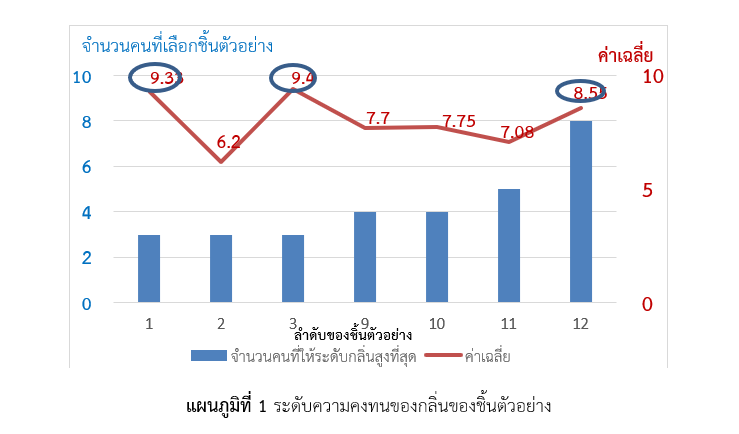
การศึกษาวิจัยในครั้งนี้มีจุดมุ่งหมายเพื่อทำการศึกษาสภาวะที่เหมาะสมในการตกแต่งชนิดการดูดซึม ด้วยน้ำมันหอมระเหยจากตะไคร้หอมซึ่งเป็นพืชพื้นถิ่นไทย และความคงทนของกลิ่นน้ำมันหอมระเหยจากตะไคร้หอม โดยทดสอบการดมกลิ่นกับกลุ่มตัวอย่างจำนวน 30 คน วิธีการดำเนินการวิจัยนำผ้าฝ้ายอินทรีย์ทดสอบเพื่อยืนยันการเป็นผลิตภัณฑ์ผ้าฝ้ายอินทรีย์แล้วทำการตกแต่งน้ำมันหอมระเหยตะไคร้หอมบนผ้าด้วยกระบวนการดูดซึม ชิ้นตัวอย่างจะถูกตกแต่งในสภาวะที่แตกต่างกัน โดยใช้อุณหภูมิ 25 และ 30 องศาเซลเซียส ระดับความเข้มข้น 3% และ 5% โดยใช้เวลา 5 10 และ 15 นาที และทำให้แห้ง แล้วนำมาทดสอบความคงทนต่อกลิ่นด้วยการดมโดยอาสาสมัคร 30 คน ให้คะแนนที่ระดับ 0-10 แล้วนำข้อมูลมาวิเคราะห์ โดยใช้ร้อยละ และค่าเฉลี่ย ผลการวิจัยสามารถสรุปผลได้ดังนี้ จากชิ้นตัวอย่างทั้งหมด 12 ชิ้น ตัวอย่างที่ 3 ซึ่งผ่านการตกแต่งที่ความเข้มข้น 3% อุณหภูมิ 25 องศาเซลเซียส และ ระยะเวลาที่แช่ 15 นาที ให้กลิ่นหอมที่คงทนที่สุด โดยได้คะแนนเฉลี่ยที่ 9.40 รองลงมาคือ ตัวอย่างที่ 1 (ความเข้มข้น 3% อุณหภูมิ 25 องศาเซลเซียส ระยะเวลาที่แช่ 5 นาที) และตัวอย่างที่ 12 (ความเข้มข้น 5% อุณหภูมิ 30 องศาเซลเซียส ระยะเวลาที่แช่ 15 นาที) โดยได้คะแนนเฉลี่ยที่ 9.33 และ 8.55 ตามลำดับ สำหรับงานวิจัยนี้ สามารถนำไปต่อยอดในเชิงพาณิชย์ด้วยการพัฒนาเป็นผลิตภัณฑ์รูปแบบอื่น ๆ อาทิเช่น เคหะสิ่งทอ เสื้อผ้าโอกาสพิเศษ เช่น ชุดถือศีลชุดเดินป่า ที่ตกแต่งสำเร็จป้องกันยุง (Anti-mosquito finishes) ได้ด้วย ทั้งยังสามารถนำไปสู่การตกแต่งผ้าเพื่อสุขภาพ เช่น การเคลือบน้ำมันตะไคร้หอมในการผลิตที่นอนยางพารา
Article Details
เอกสารอ้างอิง
ณุกานดา ภัทรปุตรานนท์, ศรีกาญจนา จตุพัฒน์วโรดม และรัตนพล มงคลรัตนาสิทธ์. (2558, 26 มิถุนายน). สมบัติกายภาพของผ้าฝ้ายผสมสแปนเด็กส์ตกแต่งด้วยไมโครแคปซูลกลิ่นน้ำมันหอมระเหย [เอกสารนำเสนอ]. การประชุมหาดใหญ่วิชาการระดับชาติ ครั้งที่ 6, มหาวิทยาลัยหาดใหญ่ สงขลา, ประเทศไทย.
นวลแข ปาลิวนิช. (2556). ความรู้เรื่องผ้าและเส้นใย (ฉบับปรับปรุงใหม่). ซีเอ็ดยูเคชั่น.
ประพาฬภรณ์ ธีรมงคล, อัชชา หัทยานานนท์, นวลแข ปาลิวนิช และจุฑาทิพ รัตนะนราพันธ์(2562). การพัฒนาผลิตภัณฑ์ของตกแต่งบ้านด้วยการย้อมสีธรรมชาติจากใบต้นคูน. วารสารเทคโนโลยีคหกรรมศาสตร์ มหาวิทยาลัยเทคโนโลยีราชมงคลพระนคร, 1(1), 33-42.
ปรรฐมาศ์ พสิษฐ์ภคกุล และสุพรรษา สมวงษ์. (2565). สถานภาพงานวิจัยภูมิปัญญาการใช้น้ำมันหอมระเหย ในการบรรเทาอาการนอนไม่หลับ. วารสารศิลปศาสตร์ (วังนางเลิ้ง) มหาวิทยาลัยเทคโนโลยีราชมงคลพระนคร, 2(1), 1-12.
รสนันท์ ศิริธรรมปิติ. (2552). การศึกษาคุณสมบัติทางกายภาพและสารปนเปื้อนในวัสดุสิ่งทอ กรณีศึกษาเส้นใยฝ้ายอินทรีย์เปรียบเทียบกับเส้นใยฝ้ายเคมี [วิทยานิพนธ์ปริญญามหาบัณฑิต ไม่ได้ตีพิมพ์]. มหาวิทยาลัยเทคโนโลยีราชมงคลธัญบุรี.
วราภรณ์ แก้วแดง, วรุณ เย็นทชิต และปรัชญาวิทย์ รื่นสุข. (2550). การศึกษาความเป็นไปได้ในการตกแต่งน้ำมันหอมระเหยบนผ้าฝ้าย [รายงานโครงการ หลักสูตรอุตสาหกรรมศาสตรบัณฑิต]. มหาวิทยาลัยเทคโนโลยีราชมงคลพระนคร.
สุธัญญา พรหมสมบูรณ์ และประพฤติ พรหมสมบูรณ์. (2559, 26 สิงหาคม). ผลของการสูดดมน้ำมันหอมระเหยจากพืชสมุนไพรที่มีต่อการผ่อนคลายความเครียด [เอกสารนำเสนอ]. การประชุมวิชาการระดับชาติ ครั้งที่ 1. มหาวิทยาลัยเกษตรศาสตร์ วิทยาเขตศรีราชา ชลบุรี, ประเทศไทย.
สวรรค์ มณีโชติ และดุสิต อธินุวัฒน์. (2562). ปัจจัยที่ส่งผลต่อความสำเร็จของเกษตรอินทรีย์ในชุมชนเกษตรกรรายย่อย จังหวัดนครสวรรค์. Thai Journal of Science and Technology (TJST), 8(6), 596-608.
สายสมร ลำลอง และพงษ์นรินทร์ ยอดสิงห์. (2559). การใช้น้ำมันหอมระเหยจากสมุนไพรไทยในการยับยั้งการเจริญของเชื้อราที่พบบนแผ่นยางพารา. วารสารวิทยาศาสตร์และเทคโนโลยี มหาวิทยาลัยอุบลราชธานี, 18(1), 30-38.
เสาวณีย์ อารีจงเจริญ. (2560). วิทยาศาสตร์เส้นใย (ฉบับปรับปรุง). คณะอุตสาหกรรมสิ่งทอและออกแบบแฟชั่น มหาวิทยาลัยเทคโนโลยีราชมงคลพระนคร.
เสาวณีย์ อารีจงเจริญ และสุขุมาล หวังวณิชพันธุ์. (2566). การพัฒนาผลิตภัณฑ์เสื้อผ้าเด็กทารกจากฝ้ายอินทรีย์. วารสารเทคโนโลยีคหกรรมศาสตร์ มหาวิทยาลัยเทคโนโลยีราชมงคลพระนคร, 5(1), 85-97.
Singh, N., Ratnapandian, S. & Sheikh, J. (2021). Durable Multifunctional Finishing of Cotton using β-Cyclodextrin-Grafted Chitosan and Lemongrass (Cymbopogon Citratus) Oil. Cellulose Chemistry and Technology, 55(1-2), 177-184.
Rohan BS Patil. (2021, 20 November). Fragrance Finishing of Textiles. https://textilelearner. net/ fragrance-finishing-of-textiles.
United Nations Environment Programme. (2023). Sustainability and Circularity in the Textile Value Chain-A Global Roadmap, Paris.
