การส่งเสริมแนวทางการท่องเที่ยวเชิงอาหารจังหวัดนนทบุรี
Article Sidebar
Main Article Content
บทคัดย่อ
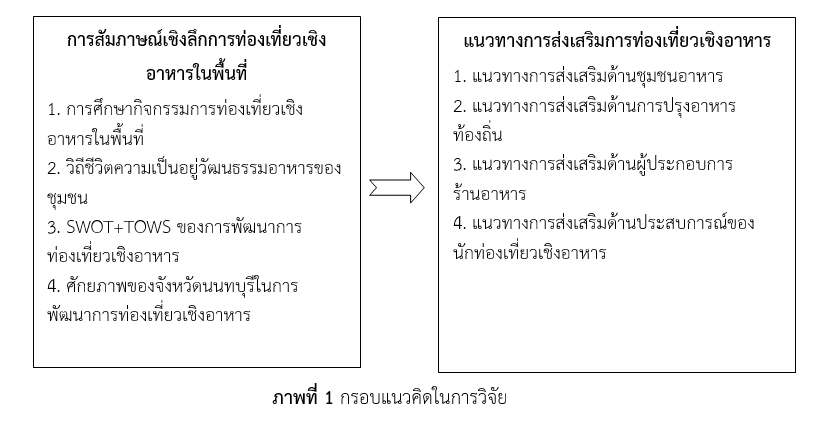
การศึกษาวิจัยในครั้งนี้มีวัตถุประสงค์เพื่อศึกษาศักยภาพการท่องเที่ยวเชิงอาหารเพื่อจัดทำแนวทางการส่งเสริมการท่องเที่ยวเชิงอาหารจังหวัดนนทบุรี โดยการวิจัยเชิงคุณภาพในการศึกษาเพื่อสร้างแนวทางการส่งเสริมอาหาร ที่ผู้วิจัยจะต้องมีปฏิสัมพันธ์กับผู้มีส่วนได้ส่วนเสียในการท่องเที่ยวเชิงเชิงอาหารในพื้นที่จังหวัดนนทบุรี ซึ่งได้แก่ ผู้ให้ข้อมูลหลัก คือ กลุ่มเชฟอาหาร กลุ่มผู้ประกอบธุรกิจร้านอาหาร กลุ่มนักท่องเที่ยวเชิงอาหาร และหน่วยงานที่เกี่ยวข้อง จำนวนทั้งสิ้น 25 คน ซึ่งผลการศึกษาพบว่า แนวทางการส่งเสริมการท่องเที่ยวเชิงอาหาร 4 C’s of Gastronomy ประกอบด้วย 4 แนวทาง ได้แก่ 1. แนวทางการส่งเสริมด้านชุมชนอาหาร ส่งเสริมการท่องเที่ยวเชิงอาหารอย่างสร้างสรรค์ให้กับนักท่องเที่ยวเชิงอาหารที่เดินทางมาท่องเที่ยว ให้ได้สัมผัสกับอาหารท้องถิ่นในจังหวัดนนทบุรีที่มีความหลากหลายของวัฒนธรรมอาหาร 2. แนวทางการส่งเสริมด้านการปรุงอาหารท้องถิ่น การนำเสนอเทคนิคการปรุงอาหารแบบดั้งเดิมของชุมชนกับกิจกรรมการท่องเที่ยวเพื่อสร้างสรรค์การท่องเที่ยวใหม่ ๆ ที่สอดคล้องกับฤดูกาลของวัตถุดิบอาหารท้องถิ่น รวมถึงการสนับสนุนผลักดันมาตรฐานร้านอาหารให้ได้รับตราสัญลักษณ์รางวัลบิบกูร์มองด์ (Bib Gourmand) สำหรับร้านอาหารในท้องถิ่นที่นำเสนอวัตถุดิบได้เป็นอย่างดี 3. แนวทางการส่งเสริมด้านผู้ประกอบการร้านอาหาร ส่งเสริมผลิตภัณฑ์อาหารท้องถิ่น การพัฒนาบุคลากรด้านการท่องเที่ยวเชิงอาหารในชุมชน และการส่งเสริมการมี
Article Details
เอกสารอ้างอิง
คณะกรรมการยุทธศาสตร์ซอฟต์พาวเวอร์แห่งชาติ. (2567, มิถุนายน 5). นโยบายสนับสนุนการสร้างพลังสร้างสรรค์หรือซอฟต์พาวเวอร์ของประเทศ. https://thacca.go.th/.
ทศพร ลิ้มดำเนิน. (2560). แนวทางการพัฒนาเส้นทางการท่องเที่ยวเชิงอาหารกรณีศึกษาคลองดำเนินสะดวก อำเภอดำเนินสะดวก จังหวัดราชบุรี [วิทยานิพนธ์ปริญญาดุษฎีบัณฑิต]. มหาวิทยาลัยศิลปากร.
นิลุบล ประเคนภัทรา และภูริ ชุณห์ขจร. (2567). กกลยุทธ์เพื่อการส่งเสริมการท่องเที่ยวเชิงอาหารเพื่อสุขภาพของประเทศไทย. วารสารวัฒนธรรมอาหารไทย, 6(1), 60–69.
ปรารภพิชญ์ กัชวัฒนะ. (2566, พฤศจิกายน 22). ใช้ Soft power “อาหารไทย” สร้างจุดเด่นให้การท่องเที่ยวเชิงอาหาร (Gastronomy Tourism) คืนรายได้ให้ชุมชนอย่างยั่งยืน. สาลิกาคาบข่าว. https://www.salika.co/2023/11/22/soft-power-gastronomy-tourism/.
ปาจรีย์ กิจกาญจนกุล. (2566). องค์ความรู้ภูมิปัญญาท้องถิ่น ด้านอาหารพื้นถิ่นมอญ ลุ่มน้ำแม่กลอง จังหวัดราชบุรี. วารสารศิลปศาสตร์ มหาวิทยาลัยธรรมศาสตร์, 23(1), 204–233.
ปุณยนุช ลีฬหะสุวรรณ. (2565). แนวทางการพัฒนาและส่งเสริมการท่องเที่ยวเชิงวัฒนธรรมของจังหวัดนนทบุรี [วิทยานิพนธ์ปรัชญาดุษฎีบัณฑิต]. มหาวิทยาลัยพะเยา.
ภัทรพร พันธุรี. (2558). การจัดกิจกรรมการท่องเที่ยวเชิงอาหาร โดยผ่านประสบการณ์ของนักท่องเที่ยวในประเทศไทย. วารสารเทคโนโลยีภาคใต้, 8(2), 27–38.
ศรุดา นิติวรการ. (2557). สำรับอาหารมอญเกาะเกร็ด จังหวัดนนทบุรี. วารสารกระแสวัฒนธรรม, 15(28), 39–58.
สริตา พันธ์เทียน, ทรงคุณ จันทจร และมาริสา โกเศยะโยธิน. (2560). รูปแบบการจัดการท่องเที่ยวเชิงอาหารไทย โดยใช้แนวคิดเศรษฐกิจสร้างสรรค์ในเขตจังหวัดลุ่มแม่น้ำภาคกลาง. วารสารวิจัยและพัฒนา มหาวิทยาลัยราชภัฏสวนสุนันทา, 9(3), 190-198.
สุปรียา ภูผาลา และจารุวรรณ แดงบุบผา. (2565). การพัฒนารูปแบบการท่องเที่ยวเชิงอาหารโดยชุมชนในประเทศไทย. วารสารวิชาการสถาบันเทคโนโลยีแห่งสุวรรณภูมิ, 8(1), 286-304.
หทัยชนก ฉิมบ้านไร และรักษ์พงศ์ วงศาโรจน์. (2558). ศักยภาพอาหารพื้นเมืองและแนวทางการส่งเสริมการท่องเที่ยวผ่านอาหาร พื้นเมืองจังหวัดน่าน. วารสารวิชาการการท่องเที่ยวไทยนานาชาติ, 11(1), 37–53.
เอื้อมพร หลินเจริญ. (2555). เทคนิคการวิเคราะห์ข้อมูลเชิงคุณภาพ. วารสารการวัดผลการศึกษา มหาวิทยาลัยมหาสารคาม. 17(1), 17-29.
