
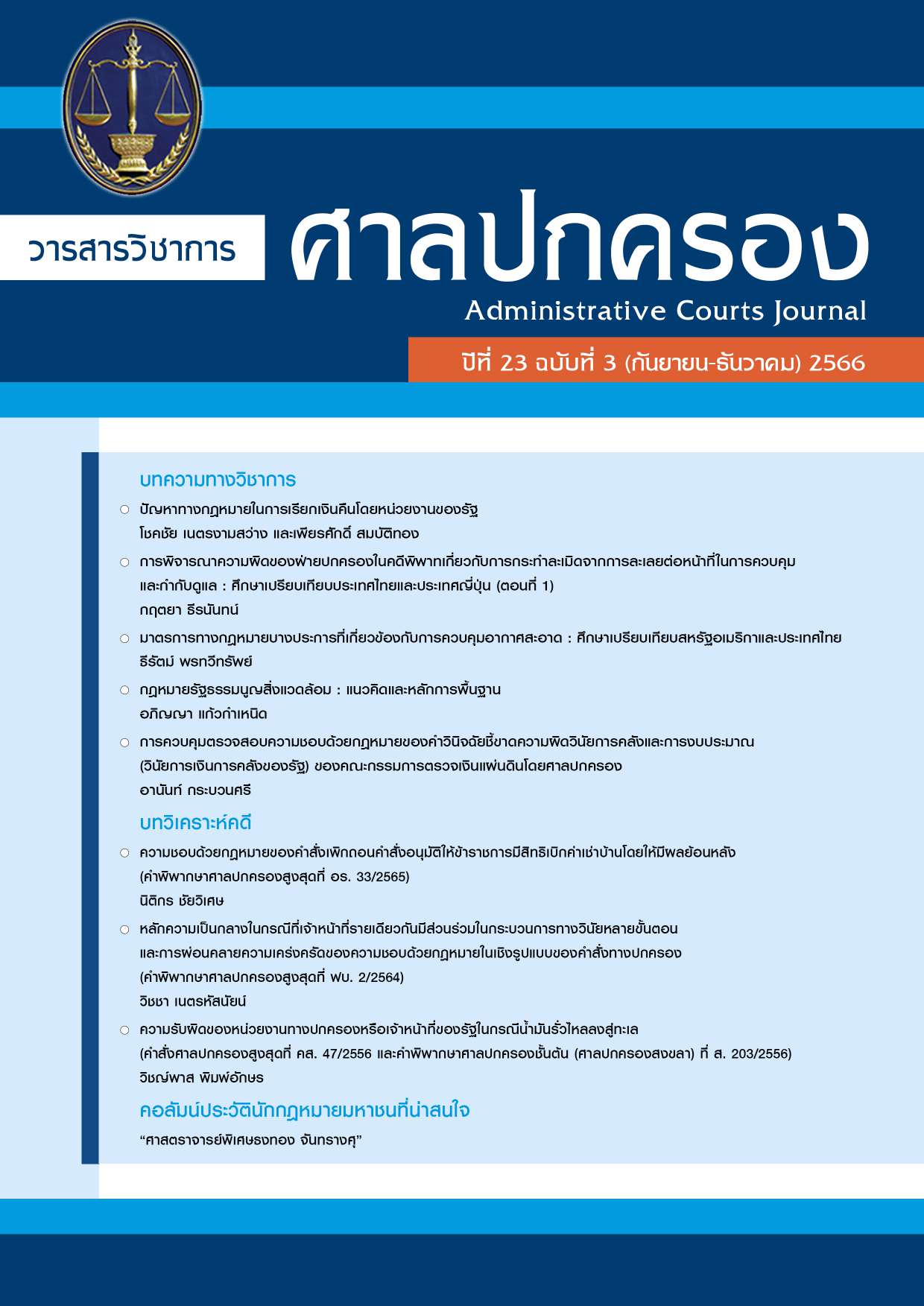
มาตรการทางกฎหมายบางประการที่เกี่ยวข้องกับการควบคุมอากาศสะอาด : ศึกษาเปรียบเทียบสหรัฐอเมริกาและประเทศไทย
Article Sidebar
Main Article Content
บทคัดย่อ
สหรัฐอเมริกาเป็นประเทศหนึ่งที่มีเป้าหมายและมาตรการในการรักษาคุณภาพอากาศให้อยู่ในระดับที่ไม่เป็นอันตรายต่อสุขภาพของประชาชน เนื่องจากมีหน่วยงานที่มีหน้าที่ในการดูแลเรื่องดังกล่าวอย่างชัดเจน และมีระบบโครงสร้างกฎหมายด้านอากาศโดยเฉพาะ ได้แก่ กฎหมายอากาศสะอาด (Clean Air Act) และมีมาตรฐานที่เกี่ยวกับการจัดการคุณภาพอากาศที่สำคัญในการควบคุมดูแลคุณภาพอากาศ เช่น มาตรฐานคุณภาพอากาศแห่งชาติ (National Ambient Air Quality Standards - NAAQS) มาตรฐานการปล่อยมลพิษทางอากาศที่เป็นอันตรายแห่งชาติ (National Emission Standards for Hazardous Air Pollutants - NESHAPs) โดยที่ในปัจจุบันประเทศไทยกำลังประสบปัญหามลพิษทางอากาศในประเทศ โดยเฉพาะปัญหาฝุ่นละอองขนาดไม่เกิน 2.5 ไมครอน (PM2.5) ที่เกินมาตรฐานคุณภาพอากาศ ซึ่งเมื่อศึกษาเปรียบเทียบการจัดการปัญหาดังกล่าวของสหรัฐอเมริกาแล้วจะเห็นได้ว่า แม้ประเทศไทยยังไม่มีกฎหมายระดับพระราชบัญญัติเพื่อแก้ไขปัญหาดังกล่าวเป็นการเฉพาะก็ตาม แต่ยังมีมาตรการทางกฎหมายที่สามารถพัฒนาได้ มีฝ่ายปกครองที่มีบทบาทสำคัญในการปรับปรุงคุณภาพอากาศ ตลอดจนฝ่ายตุลาการ ซึ่งได้แก่ศาลปกครองยังมีบทบาทที่จะผลักดันให้สภาพอากาศในประเทศไทยมีคุณภาพที่ดีขึ้นอีกด้วย บทความชิ้นนี้จึงนำเสนอภาพรวมของกฎหมายอากาศสะอาดและมาตรการทางกฎหมายของสหรัฐอเมริกา เพื่อเปรียบเทียบกับกฎหมายและมาตรการทางกฎหมายที่เกี่ยวกับการควบคุมคุณภาพอากาศของประเทศไทย และเพื่อเป็นแนวทางในการแก้ไขปัญหาฝุ่นละอองขนาดไม่เกิน 2.5 ไมครอน (PM2.5) ที่ประเทศไทยกำลังเผชิญอย่างต่อเนื่อง นอกจากนี้ บทความชิ้นนี้ยังได้นำเสนอคำพิพากษาศาลปกครองเชียงใหม่ที่ ส. 1/2564 ซึ่งเป็นตัวอย่างของคำพิพากษาที่วินิจฉัยประเด็นที่เกี่ยวข้องกับการปฏิบัติหน้าที่ของหน่วยงานของรัฐในการแก้ไขปัญหาดังกล่าว
Downloads
Article Details

อนุญาตภายใต้เงื่อนไข Creative Commons Attribution-NonCommercial-NoDerivatives 4.0 International License.
