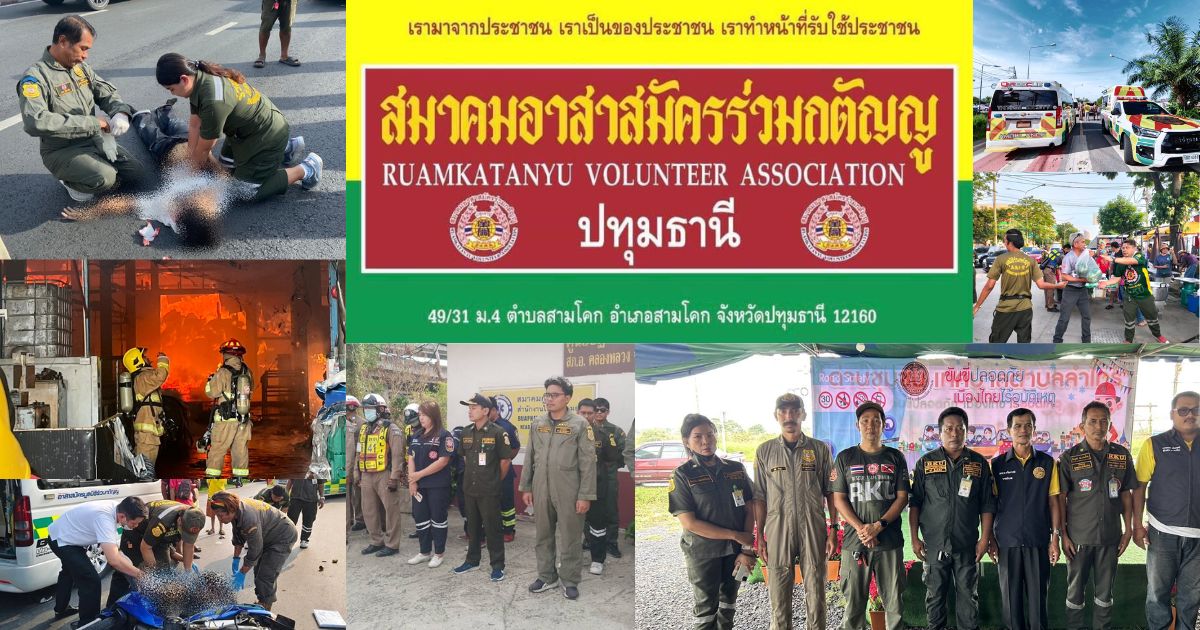
Motivation for Being a Volunteer of Ruamkatanyu Foundation Rescue Volunteers, Pathum Thani Province
DOI:
https://doi.org/10.65680/jahs.v3i1.6862Keywords:
motivation, volunteering, rescue volunteers, Ruamkatanyu FoundationAbstract
This research aimed to study the level of motivation for volunteering among rescue volunteers of the Ruamkatanyu Foundation in Pathum Thani Province and to examine differences in motivation based on personal factors including gender, age, education, marital status, and years of service. A mixed research method combining quantitative and qualitative approaches was employed. The sample consisted of 250 participants selected through simple random sampling. The research instrument was a questionnaire with Cronbach's alpha reliability coefficient of .837. Data analysis included descriptive and inferential statistics. Results revealed that overall motivation for volunteering was at a high level (mean = 4.13). When analyzed by specific factors, all aspects were rated high: happiness in work showed the highest mean (4.36), followed by desire to see others relieved from suffering (4.20), self-worth (4.15), having volunteer role models (4.15), admiration for the organization (4.07), and support from friends (3.86). Comparison based on personal factors showed no statistically significant differences. This research demonstrates that motivation for volunteering stems more from internal factors than external ones.
References
Boonma, N. W. (n.d.). Factors influencing volunteer activities of disabled students in the Hearts Beyond a Hundred community at Nakhon Pathom Rajabhat University [Conference paper]. Sustainable Rural Development Conference 4. https://cscd.kku.ac.th
Bunlon, P. (2021). Motivation for volunteer work according to Buddhist psychology principles among people of various occupations in Thai society. MCU Humanities Review, 7(1), 72.
Chutikamee, C., et al. (2022). Study of supporting factors in eliminating defilements of dharma path doctor volunteers. Philosophy Ashram Journal, 4(1), 104–105.
Dhammajitto, P. J. (Channaang). (2022). Promoting volunteering according to Bodhisattva principles. Mahachulalongkorn Academic Journal, 8(1), 71–72.
Dhammawachiro, P. M. W., et al. (2020). Models for creating volunteering and public benefit among university students in Loei Province. Journal of Roi Kaensarn Academy, 5(2), 97–98.
Phimphiriyakul, P., et al. (2022). Application of Buddhist volunteering with village health volunteers (VHV) work in Seamed Subdistrict, Mueang Buriram District, Buriram Province. MCU Buriram Academic Journal, 7(2), 132–133.
Phra Dhammapitaka (P. A. Payutto). (1998). Education as a development tool that still needs development. Buddhist Dharma Foundation.
Phorungphanom, T. (2011). Rewards from being a volunteer according to social exchange theory: A case study of Japanese volunteers at Baan Rom Sai Foundation [Master's thesis, Chiang Mai University].
Pisanbut, S. (2013). Creating and processing questionnaire data. Withayapat.
Sangphan, K. (n.d.). Motivation for performance of volunteer rescue workers at Rom Sai Foundation, Satun Province. http://www.mpa-mba.ru.ac.th
Sukbamrungsin, S. (2010). Work motivation of teachers at Laem Chabang Engineering School, Chonburi Province [Master's thesis, Burapha University].
Wanchai, A., et al. (n.d.). Development of nursing students' volunteer behavior using virtue projects. https://so06.tci-thaijo.org
Worapongdhon, T. (2018). Population, samples, and sample size for research. Journal of Health Promotion and Environmental Health, 21–22.
Zhang, R. (2019). Study of the relationship between motivation and happiness of volunteers: A case study of Buddhist Tzu Chi Foundation Taiwan in Thailand [Master's thesis, Mahachulalongkornrajavidyalaya University].
Downloads
Published
How to Cite
Issue
Section
License
Copyright (c) 2024 Journal of Applied Humanities Studies

This work is licensed under a Creative Commons Attribution 4.0 International License.
Published articles are copyrighted by the Journal of Applied Humanities Studies.
The contents of each article in this academic journal represent the personal opinions of the individual authors and are not affiliated with the Journal of Applied Humanities Studies or any other editorial team within the publishing house. The responsibility for all content of each article rests with the individual authors. Any errors or omissions are solely the responsibility of each individual author.