การวิเคราะห์การจัดสรรทุนการศึกษา มหาวิทยาลัยแม่โจ้-ชุมพร ระหว่างปีการศึกษา 2563-2565
คำสำคัญ:
ทุนการศึกษา, การวิเคราะห์, การจัดสรรทุนการศึกษาบทคัดย่อ
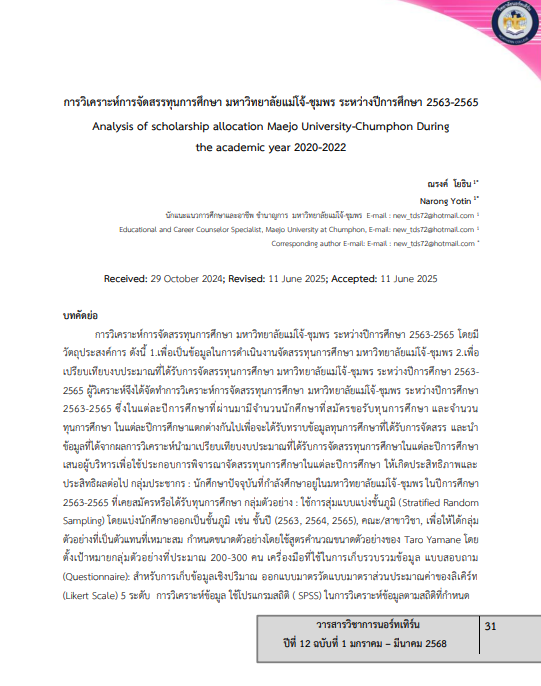
การวิเคราะห์การจัดสรรทุนการศึกษา มหาวิทยาลัยแม่โจ้-ชุมพร ระหว่างปีการศึกษา 2563-2565 โดยมีวัตถุประสงค์การ ดังนี้ 1.เพื่อเป็นข้อมูลในการดำเนินงานจัดสรรทุนการศึกษา มหาวิทยาลัยแม่โจ้-ชุมพร 2.เพื่อเปรียบเทียบงบประมาณที่ได้รับการจัดสรรทุนการศึกษา มหาวิทยาลัยแม่โจ้-ชุมพร ระหว่างปีการศึกษา 2563-2565 ผู้วิเคราะห์จึงได้จัดทำการวิเคราะห์การจัดสรรทุนการศึกษา มหาวิทยาลัยแม่โจ้-ชุมพร ระหว่างปีการศึกษา 2563-2565 ซึ่งในแต่ละปีการศึกษาที่ผ่านมามีจำนวนนักศึกษาที่สมัครขอรับทุนการศึกษา และจำนวนทุนการศึกษา ในแต่ละปีการศึกษาแตกต่างกันไปเพื่อจะได้รับทราบข้อมูลทุนการศึกษาที่ได้รับการจัดสรร และนำข้อมูลที่ได้จากผลการวิเคราะห์นำมาเปรียบเทียบงบประมาณที่ได้รับการจัดสรรทุนการศึกษาในแต่ละปีการศึกษาเสนอผู้บริหารเพื่อใช้ประกอบการพิจารณาจัดสรรทุนการศึกษาในแต่ละปีการศึกษา ให้เกิดประสิทธิภาพและประสิทธิผลต่อไป กลุ่มประชากร : นักศึกษาปัจจุบันที่กำลังศึกษาอยู่ในมหาวิทยาลัยแม่โจ้-ชุมพร ในปีการศึกษา 2563-2565 ที่เคยสมัครหรือได้รับทุนการศึกษา กลุ่มตัวอย่าง : ใช้การสุ่มแบบแบ่งชั้นภูมิ (Stratified Random Sampling) โดยแบ่งนักศึกษาออกเป็นชั้นภูมิ เช่น ชั้นปี (2563, 2564, 2565), คณะ/สาขาวิชา, เพื่อให้ได้กลุ่มตัวอย่างที่เป็นตัวแทนที่เหมาะสม กำหนดขนาดตัวอย่างโดยใช้สูตรคำนวณขนาดตัวอย่างของ Taro Yamane โดยตั้งเป้าหมายกลุ่มตัวอย่างที่ประมาณ 200-300 คน เครื่องมือที่ใช้ในการเก็บรวบรวมข้อมูล แบบสอบถาม (Questionnaire): สำหรับการเก็บข้อมูลเชิงปริมาณ ออกแบบมาตรวัดแบบมาตราส่วนประมาณค่าของลิเคิร์ท (Likert Scale) 5 ระดับ การวิเคราะห์ข้อมูล ใช้โปรแกรมสถิติ ( SPSS) ในการวิเคราะห์ข้อมูลตามสถิติที่กำหนด
ผลการวิเคราะห์พบว่า ในปีการศึกษา 2564 มีจำนวนนักศึกษาสมัครขอรับทุนการศึกษา มากที่สุด จำนวน 60 คน คิดเป็นร้อยละ 56.07 จากจำนวนนักศึกษาระดับปริญญาตรี 107 คน รองลงมาคือปีการศึกษา 2563 มีจำนวนนักศึกษาสมัครขอรับทุนการศึกษา มากที่สุด จำนวน 20 คน คิดเป็นร้อยละ 26.31จากจำนวนนักศึกษาระดับปริญญาตรี 76 คน และน้อยที่สุด คือปีการศึกษา 2565 มีจำนวนนักศึกษาสมัครขอรับทุนการศึกษา มากที่สุด จำนวน 35 คน คิดเป็นร้อยละ 12.32 จากจำนวนนักศึกษาระดับปริญญาตรี 284 คน
เอกสารอ้างอิง
ดิเรก ปัทมสิริวัฒน์. (2551). การคลังเพื่อการศึกษา : สินเชื่อการศึกษาเพื่อพัฒนาทุนมนุษ์และลดความเหลื่อมล้ำกรุงเทพฯ : มหาวิทยาลัยธรรมศาสตร์.
อารี พันธมณี. (2538 : 179-182). จิตวิทยาการเรียนการสอน. กรุงเทพฯ : เลิฟแอนดลิพเพรส.
เจือจันทร์ จงสถิตอยู่. (2524,ธันวาคม-2525,มกราคม). ความต้องการทางการศึกษา : โอกาสและทางเลือก. วารสารการศึกษาแหงชาติ. 16(2) : 17-23.
ศราวรณ์ ศิรพันธุ์.2544. ปัจจัยที่มีอิทธิพลต่อการเลือกศึกษาต่อในระดับปริญญาโท ด้านคอมพิวเตอร์และเทคโนโลยีสารสนเทศ ของบัณฑิตด้านคอมพิวเตอร์และ เทคโนโลยีสารสนเทศ สถาบันอุดมศึกษาของรัฐในสังกัดทบวงมหาวิทยาลัย ใน เขตกรุงเทพฯ.
วิทยานิพนธ์ครุศาสตร์อุตสาหกรรมมหาบัณฑิต สาขาวิชา คอมพิวเตอร์และเทคโนโลยีสารสนเทศ.มหาวิทยาลัยเทคโนโลยีพระจอมเกล้าธนบุรี.
เสาร์คำ คำมาลัย. 2541.ความเสมอภาคของโอกาสการเข้าศึกษาในสถาบันราชภัฎ เชียงใหม่ ปีการศึกษา 2540. นิพนธ์ปริญญาวิทยาศาสตรมหาบัณฑิต สาขาวิชา เศรษฐาศตร์เกษตร.มหาวิทยาลัยแม่โจ้.
จรัสศรี จุฑาจินดาเขต (2541).วิเคราะห์งบประมาณแผ่นดิน คณะศึกษาศาสตร์ ประจำปีงบประมาณ 2535-2540.
อรุณศรี กางเพ็ง (2542). วิเคราะห์งบประมาณแผ่นดิน คณะศึกษาศาสตร์ ประจำปีงบประมาณ 2541-2542.
ดาวน์โหลด
เผยแพร่แล้ว
รูปแบบการอ้างอิง
ฉบับ
ประเภทบทความ
สัญญาอนุญาต

อนุญาตภายใต้เงื่อนไข Creative Commons Attribution-NonCommercial-NoDerivatives 4.0 International License.