
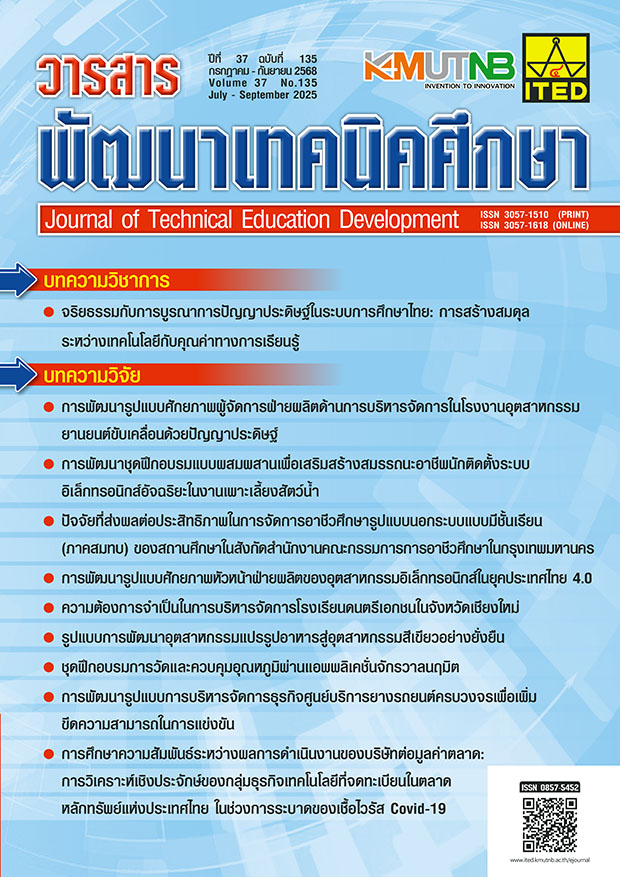
Development of a Managerial Competency Model for Automotive Manufacturing Manager in the Automotive Industry Utilizing Artificial Intelligence
Article Sidebar
Main Article Content
Abstract
The aims of this research were: 1) to study the components of a manager competency development model for automotive manufacturing managers in the automotive industry utilizing artificial intelligence (AI); 2) to develop a competency management model for the target employees, i.e. automotive manufacturing managers and 3) to design and develop a competency-based Development Guide to serve as a professional development tool for prospective manufacturing managers of the automotive industry using AI technologies.
The sample group are managements level of the automotive industry in the eastern region Chonburi, Chachoengsao and Rayong. Qualitative data were obtained from conducting in-depth interviews with 14 experts and from a panel discussion where the panelist comprised 16 industry experts in the field. The sample size was the population using random sampling. Quantitative data was obtained from a survey where 416 respondents provided answers to questions. Statistical methods used in data analysis were frequency, percentage, mean, standard deviation, and exploratory factor analysis (EFA).
The results showed 3 essential components of a successful competency-based development framework including Knowledge, Skills and Desirable characteristics of an effective manager. The first dimension, “Knowledge”, consists of 6 subcomponents, namely,
1.1 Artificial Intelligence technology knowledge; 1.2 knowledge on innovation that connect production data; 1.3 achieving human development across all employee through artificial intelligence; 1.4 Planning of operations management; 1.5 design of the production process is according with artificial intelligence; 1.6 knowledge about risk assessment. Was at the good level, The second core component “Skills” covers 7 subcomponents as follows: 2.1 data management with Artificial Intelligence; 2.2 capabilities in manufacturing change management; 2.3 coordination competencies for common understanding and effective change management; 2.4 command and potential assessment skills; 2.5 artificial intelligence -based production control; 2.6 incorporating AI in corporate manufacturing process; 2.7 continuous improvement and operational optimization with AI deployment. Was at the good level , and the third key element “desirable qualities” consists of 5 sub-components as follows: 3.1 being a successful change leader who can effectively manage change in the organization; 3.2 being a good role model; 3.3 open-mindedness and open-minded listening;
3.4 building good work relationships and possessing teamwork skills; 3.5 sense of responsibility. Was at the good level.
According to the results of model development assessment and manual evaluation, the developed competency framework received unanimous approval by the 16 experts (100%) for its suitability. Likewise, the user manual was unanimously approved by all 5 persons (100%) of the expert panel for its appropriateness and practical implementation for the future.
Article Details

This work is licensed under a Creative Commons Attribution-NonCommercial-NoDerivatives 4.0 International License.
References
สำมะโนธุรกิจและอุตสาหกรรมสำนักงานสถิติแห่งชาติ (2555).อุตสาหกรรมการผลิต.[สืบค้นเมื่อวันที่ 10 มีนาคม 2564]. จาก ttps://www.nso.go.th/sites/2014-2555
ณัฐดนย์ พรรณุเจริญวงษ์. (2562). เจาะโลกอนาคต จับกระแส 6 เทรนด์อุตสาหกรรมยานยนต์. [สืบค้นเมื่อวันที่ 6 กุมภาพันธ์ 2564]. จาก https://www.matichon.co.th/prachachuen/prachachuen-scoop/news_1363296
ศูนย์วิจัยกสิกรไทย. (2564).แนวโน้มการเติบโตรถยนต์ไฟฟ้าประเทศไทย.[สืบค้นเมื่อวันที่ 30 พฤษภาคม 2564]. จาก https://www.kasikornresearch.com/th/analysis/k-social-media/Pages/xEV-FB-23-04-2021.aspx
สถาบันเทคโนโลยีการผลิตสุมิพล. (2564).วิธีการวางแผนการผลิตเบื้องต้นที่ควรทราบ.[สืบค้นเมื่อวันที่ 20 กุมภาพันธ์ 2564]. จาก https://www.sumipol.com/knowledge/how-to-plan-the-production/.
John McCarthy. (1956). A Proposal for the Dartmouth Summer Research Project on Artificial Intelligence, August 31, 1955.
สุภาวัลย์ เชาว์พาณิชย์เจริญ และสถาพร โอภาสานนท์. (2562). การพัฒนาดัชนีชี้วัดประสิทธิภาพเพื่อเตรียมความพร้อมเข้าสู่อุตสาหกรรม 4.0 ของสถานประกอบการชิ้นส่วนยานยนต์ไทยในระดับ First Tier. จุฬาลงกรณ์ธุรกิจปริทัศน์.
เมธี จันทวิมล และสุรชัย โฆษิตบวรชัย. (2551). การพัฒนาชุดฝึกอบรมแบบ e-Training. เรื่องทักษะการสอนงานสำหรับหัวหน้างาน.(ม.ป.ป.)
McClelland David.C. (1973). Testing for Competency rather than for Intelligence. American Phychologist.
กรมโรงงานอุตสาหกรรมกระทรวงอุตสาหกรรม (2565).บริการข้อมูลหมวดข้อมูลโรงงาน.[สืบค้นเมื่อวันที่ 30 พฤษภาคม 2564]. จาก https://www.diw.go.th/webdiw/s-data-fac/
Taro Yamane. (1973). Statistics: An Introductory analysis. Third edition. New York Harper and Row Publication.
ธานินทร์ ศิลป์จารุ.(2550). การวิจัยและวิเคราะห์ข้อมูลทางสถิติด้วย SPSS. พิมพ์ครั้งที่ 7.กรุงเทพมหานคร: วี. อินเตอร์พริ้น.
สุภมาส อังศุโชติ สมถวิล วิจิตวรรณา และรัชนีกูล ภิญโญภานุวัฒน์. (2552). สถิติวิเคราะห์สำหรับการวิจัยทางสังคมศาสตร์และพฤติกรรมการศาสตร์ เทคนิคการใช้โปรแกรม Lisrel. พิมพ์ครั้งที่ 3. กรุงเทพมหานคร : เจริญดีมั่นคงการพิมพ์.
ฉัตรศิริ ปิยะพิมลสิทธิ. (2559). การใช้ IBM SPSS Statistics เพื่อการวิเคราะห์ข้อมูล. (ม.ป.ป)
พีรยสถ์ อยู่ประพัฒน์และตรีเนตร ตันตระกูล. (2563). การพัฒนา นวัตกรรม เทคโนโลยี เพื่อส่งเสริมความสามารถในการแข่งขันผู้ประกอบการอุตสาหกรรมผลิตชิ้นส่วนยานยนต์ในประเทศไทย.(ม.ป.ป.)Journal of Suvarnabhumi Institute of Technology (Humanities and Social Sciences).
ชุติเดช มั่นคงธรรม, ประพัฒสอน เปียกสอน
และชาริณี พลวุฒิ. (2560). ปัจจัยที่มีผลต่อความสำเร็จ
ในการจัดการของธุรกิจโรงงานเกี่ยวกับอุตสาหกรรมยานยนต์ในเขตนิคมอุตสาหกรรม
ภาคตะวันออก. กรุงเทพมหานครฯ : คณะบริหารธุรกิจมหาวิทยาลัยกรุงเทพธนบุรี.
ฉัตรธีรพล ปรัชญาลภัสศิร. (2562). การศึกษานวัตกรรมปัญญาประดิษฐ์เพื่อการบริหารทุนมนุษย์ในประเทศไทย: กรณีศึกษาองค์กรกลุ่มธุรกิจยานยนต์. มหาวิทยาลัยมหิดล.
Panagiotis Trakadas. (2020). An Artificial Intelligence-Based Collaboration Approach in Industrial IoT Manufacturing: Key Concepts, Architectural Extensions and Potential Applications.
พงษ์ศักดิ์ อังสุพันธุ์. (2563). คู่มือบริหารความเสี่ยง ฉบับปรับปรุง ปี 2563.สำนักพัฒนาวิทยาศาสตร์และเทคโนโลยีแห่งชาติ.กระทรวงการอุดมศึกษา วิทยาศาสตร์ วิจัยและนวัตกรรม.
อรพรรณ อาจหาญยิ่ง. (2559). เทคโนโลยีสารสนเทศเบื้องต้น.[สืบค้นเมื่อวันที่ 12 เมษายน 2564].จากhttps://sites.google.com/site/newteamacc2559/kar-cadkar-khxmul.
ชาติชาย คงเพ็ชรดิษฐ์ และธีระวัฒน์ จันทึก. (2559). การบริหารการเปลี่ยนแปลงบทบาทของภาวะผู้นำและ การสื่อสารในองค์การ.วารสารสาขามนุษยศาสตร์ สังคมศาสตร์และศิลปะม,9(1).898-919.
Hughes, Richard L., Ginnett, Robert C. and Curphy, Gordon J. (2002) Leadership : Enhancing the Lessons of Experience. 4th ed. Songapore: McGraw-Hill, 2002.
ธีรวุฒิ บุณยโสภณ, (2556), “Basic Industrial Management: พื้นฐานบริหารงานอุตสาหกรรม”. พิมพ์ครั้งที่ 9. กรุงเทพมหานคร : ศูนย์ผลิตตำราเรียน มหาวิทยาลัยเทคโนโลยีพระจอมเกล้าพระนครเหนือ.
Min Li1 and Zamira Madina. (2021). Artificial Intelligence Assists the Construction of Quantitative Model for the High-Quality Development of Modern Enterprises. Tongda College of Nanjing University of Posts and Telecommunications, Jiangsu 225127, China.
ณัฐสรัฐ สุหุมานันท์. (2560). เทคโนโลยีปัญญาประดิษฐ์และการเจาะตลาดโดยกลยุทธ์ส่วนบุคคล. วิทยานิพนธ์ บริหารธุรกิจดุษฎีบัณฑิต สาขาวิชาบริหารธุรกิจ มหาวิทยาลัยกรุงเทพ.
อรอนงค์ โรจน์วัฒนบูลย์. (2554). การพัฒนาตัวแบบผู้นําเชิงนวัตกรรม. วิทยานิพนธ์ รัฐประศาสนศาสตรดุษฎีบัณฑิต สาขาวิชารัฐประศาสนศาสตร์ บัณฑิตวิทยาลัย สถาบันบัณฑิตพัฒนบริหารศาสตร์.
ประภัสสร ไตรลาภวิฒิ, บุษกร วัฒนบุตร, และนันทนา ชวศิริกุลฑล. (2563). แนวทางการพัฒนาทุนมนุษย์ใน การขับเคลื่อนองค์กรสู่ความสำเร็จ. ปริญญานิพนธ์ศิลปศาสตรบัณฑิต คณะศิลปะศาสตร์ มหาวิทยาลัย นอร์ทกรุงเทพ.
มุจรินท์ บุรีนอก. (2557). รูปแบบการพัฒนาบุคลากรระดับหัวหน้างานสายการผลิตกลุ่มโรงงานผลิตชิ้นส่วนยานยนต์. วิทยานิพนธ์ บริหารธุรกิจดุษฎีบัณฑิต สาขาวิชาการพัฒนาธุรกิจ อุตสาหกรรมและทรัพยากรมนุษย์ บัณฑิตวิทยาลัย มหาวิทยาลัยเทคโนโลยีพระจอมเกล้าพระนครเหนือ.
ทวีวัฒน์ มหาศิริอภิรักษ์. (2561). รูปแบบการพัฒนาศักยภาพหัวหน้างานฝ่ายผลิตเพื่อสร้างสรรค์นวัตกรรมในอุตสาหกรรมผลิตชิ้นส่วนยานยนต์. วิทยานิพนธ์ บริหารธุรกิจดุษฎีบัณฑิต สาขาวิชาการพัฒนาธุรกิจ อุตสาหกรรมและทรัพยากรมนุษย์ บัณฑิตวิทยาลัย มหาวิทยาลัยเทคโนโลยีพระจอมเกล้าพระนครเหนือ
สถาบันเทคโนโลยีการผลิตสุมิพล. (2564). วิธีการวางแผนการผลิตเบื้องต้นที่ควรทราบ. [สืบค้นวันที่ 24 มีนาคม 2564]. จาก https://www.sumipol.com/knowledge/how-to-plan-the-production/
สุกัญญา รัศมีธรรมโชติ. (2547). Competency : เครื่องมือการบริหารที่ปฏิเสธไม่ได้. Productivity. พิมพ์ครั้งที่ 2. กรุงเทพมหานคร : ศิริวัฒนาอินเตอร์พรินท์จํากัด (มหาชน).
สมชาติ กิจยรรยง และอรจรีย์ ณ ตะกั่วทุ่ง. (2539). เทคนิคการจัดฝึกอบรมอย่างมีประสิทธิภาพ. กรุงเทพมหานคร : ซีเอ็ดยูเคชั่น.
วิชัย วงษ์ใหญ่ และ มารุต พัฒผล. (2562). การประเมินตามสภาพจริงอิงสมรรถนะ. [สืบค้นวันที่ 24 มีนาคม 2564]. จาก www.curriculumandlearning.com
