
Blue Earth Innovation Reduce Emission of Aircraft
Article Sidebar
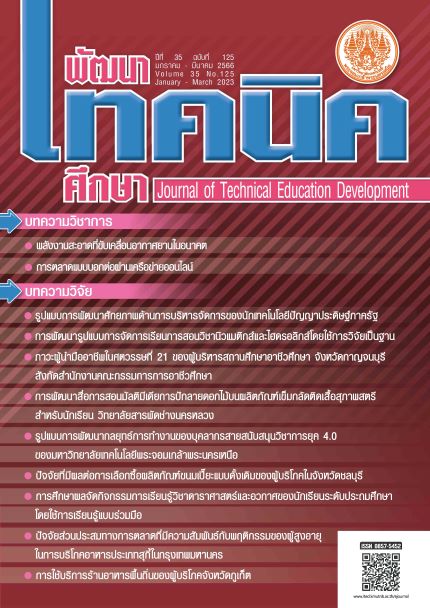
Main Article Content
Abstract
This academic paper focuses on the future of clean energy that will be used to propel aircraft in the future. The new type of clean energy will have significant positive impact on the environment as the current source of fuel generated from aircraft engine and from the aerospace industry. This study serves to promote awareness and to inspire research and development of new energy alternatives that can be utilized in the aerospace industry with the intention of reducing pollution.
The resulting pollution emitted by aircraft engine during flight contributes to the higher year on year overall global temperature and the changes in seasonality from years before are causes for concern and the aerospace industry should take to heart the significance of impact that air travel has on the global environment. It is therefore very important for the major players in the aeronautical industry to take action to find ways to cut emissions to lower environmental impact. This means that manufacturers and engineers need to rethink their design and material use to enable the aeronautical industry to be more environmentally friendly which means innovative use of alternative sources of fuel or clean energy such as electric or hybrid engines while vehicles used in the airports should also be changed from combustion to electric. This will have a positive impact on the environment within the airport and the environment in general going forward. Improve engine performance and/or alternative fuel, aircraft parts to lower weight and thus pollution, airports must have ways to better manage traffic to improve fuel efficiency of aircraft.
Article Details

This work is licensed under a Creative Commons Attribution-NonCommercial-NoDerivatives 4.0 International License.
References
Cohen, B. S., Bronzaft, A. L., Heikkinen, M., Goodman, J., & Nádas, A. (2007). Airport- related air pollution and noise. Journal of occupational and environmental hygiene, 5(2), 119-129.
Kaya, S. K., & Erginel, N. (2020). Futuristic airport: A sustainable airport design by integrating hesitant fuzzy SWARA and hesitant fuzzy sustainable quality function deployment. Journal of Cleaner Production, 275, 123880.
Baxter, G., Srisaeng, P., & Wild, G. (2018). Sustainable airport waste management: The case of Kansai international airport. Recycling, 3(1), 6.
Grönstedt, T., & others. (2016, June). Ultra low emission technology innovations for mid- century aircraft turbine engines. In ASME Turbo Expo 2016: Turbomachinery Technical Conference and Exposition. American Society of Mechanical Engineers Digital Collection.
Goonetilleke, A., Yigitcanlar, T., Ayoko, G. A., & Egodawatta, P. (2014). Sustainable urban water environment: Climate, pollution and adaptation. Cheltenham, UK: Edward Elgar.
Marques, G., & Pitarma, R. (2019). Noise monitoring for enhanced living environments based on Internet of things. In World Conference on Information Systems and Technologies (pp. 45-54). Springer, Cham.
Hudda, N., Durant, L. W., Fruin, S. A., & Durant, J. L. (2020). Impacts of aviation emissions on near-airport residential air quality. Environmental Science & Technology, 54(14),
-8588.
Behmel, S., Damour, M., Ludwig, R., & Rodriguez, M. J. (2016). Water quality monitoring strategies—A review and future perspectives. Science of the Total Environment, 571, 1312-1329.
Penn, S. L., Boone, S. T., Harvey, B. C., Heiger-Bernays, W., Tripodis, Y., Arunachalam, S., & Levy, J. I. (2017). Modeling variability in air pollution-related health damages from individual airport emissions. Environmental research, 156, 791-800.
Fajersztajn, L., & others (2019). Health effects of pollution on the residential population near a Brazilian airport: A perspective based on literature review. Journal of Transport & Health, 14, 100565.
Stevens, B. L., Lewis, F. L., & Johnson, E. N. (2015). Aircraft control and simulation: dynamics, controls design, and autonomous systems. John Wiley & Sons.
Jung, J., Nag, S., & Modi, H. C. (2019, September). Effectiveness of Redundant Communications Systems in Maintaining Operational Control of Small Unmanned Aircraft. In 2019 IEEE/AIAA 38th Digital Avionics Systems Conference (DASC) (pp. 1-7). IEEE.
Zhang, J., & others (2018). Aircraft control surfaces using co-flow jet active flow control airfoil. In 2018 Applied Aerodynamics Conference (p. 3067).
Budd, L., Griggs, S., & Howarth, D. (2013). Sustainable aviation futures. Emerald Group Publishing.
Grobler, C., & others (2019). Marginal climate and air quality costs of aviation emissions. Environmental Research Letters, 14(11), 114031.
Hoelzen, J., & others (2018). Conceptual design of operation strategies for hybrid electric aircraft. Energies, 11(1), 217.
Donateo, T., De Pascalis, C. L., & Ficarella, A. (2019). Synergy effects in electric and hybrid electric aircraft. Aerospace, 6(3), 32.
