
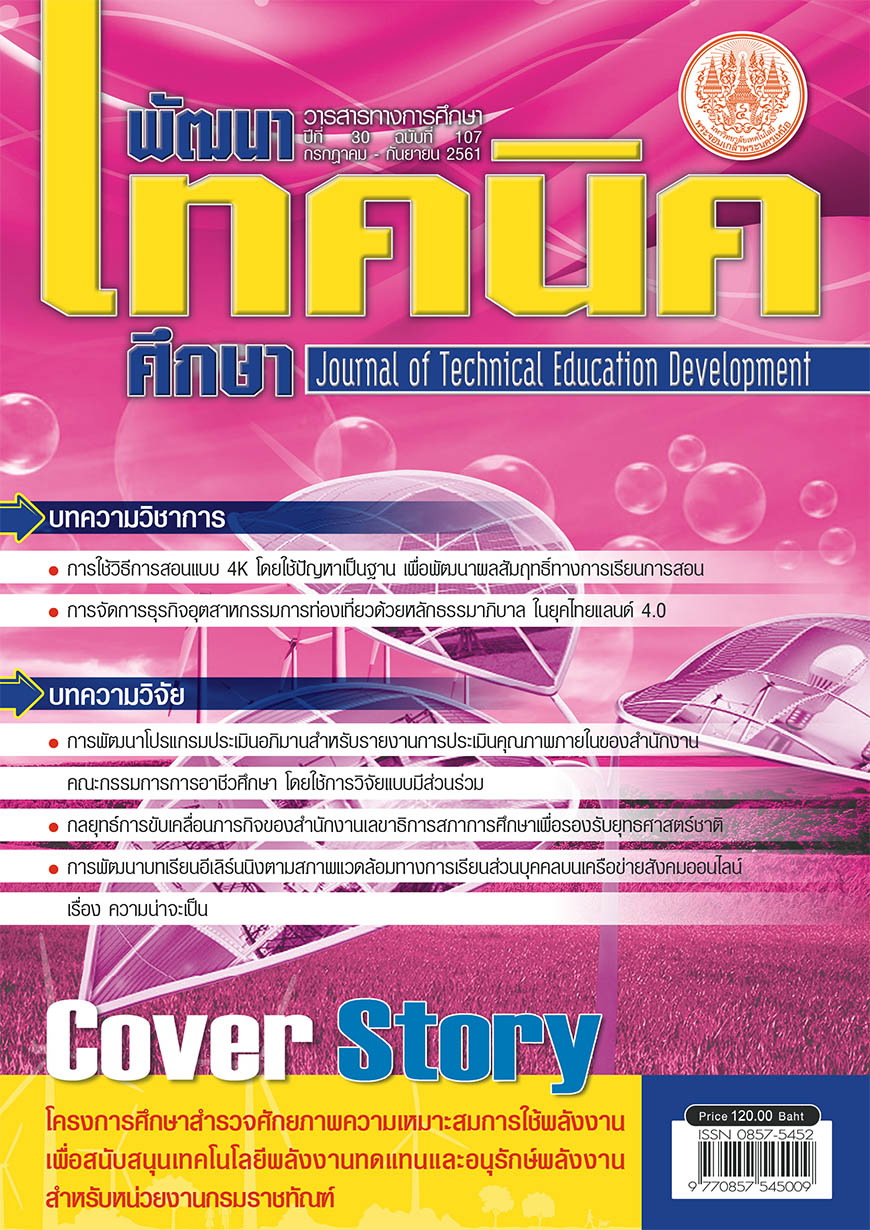
The use of 4K teaching methods are based on the problem-based learning for development the instructional achievement.
Article Sidebar
Main Article Content
Abstract
The use of 4K teaching methods are based on the problem-based learning for development the instructional achievement. It changes the instructor roles including the creation of activities and skills in the suggestion on process of learning approach, counselling, problem-solving, and reflections on the events of learning. The instructor also guides the students about on the events of learning. The instructor also guides the students about the advantages and disadvantages of problem-based method. Additionally, undergraduate students were able to enhance their systematic decision in motivation, self-study and knowledge management skills. The effectiveness developments of teaching and learning were applied to the library and information sciences with the professions that require skilled personnel in learning, forecasting, and using the information technology for knowledge in learning, forecasting, and using the information technology for knowledge management in lifelong learning.
Article Details

This work is licensed under a Creative Commons Attribution-NonCommercial-NoDerivatives 4.0 International License.
References
สำนักงานเลขาธิการสภาการศึกษา. (2560). (ร่าง) กรอบทิศทางแผนการศึกษาแห่งชาติ พ.ศ. 2560- 2575. กรุงเทพมหานคร : กระทรวงศึกษาธิการ.
ไพศาล สุวรรณน้อย. (2560). เอกสารประกอบการบรรยายโครงการพัฒนาการเรียนการสอน เรื่อง การเรียนรู้โดยใช้ปัญหาเป็นฐาน (Problem-based Learning: PBL). ขอนแก่น : สถาบันพัฒนาทรัพยากรมนุษย์ ฝ่ายวิชาการ มหาวิทยาลัยขอนแก่น.
บุญญลักษม์ ตำนานจิตร. (2559). การเปรียบเทียบผลสัมฤทธิ์ทางการเรียนการสอนโดยใช้ปัญหาเป็นฐานด้วยกระบวนการจัดการความรู้รายวิชาการจัดการห้องสมุดและองค์กรสารสนเทศ. กรุงเทพมหานคร : มหาวิทยาลัยสวนดุสิต.
ดิชิตชัย เมตตาริกานนท์ และเดชดนัย จุ้ยชุม. (2559). สมรรถนะที่จำเป็นสำหรับนักศึกษาบรรณารักษศาสตร์และสารสนเทศศาสตร์: การสร้างความพร้อมเพื่อการเป็นบรรณารักษ์ในศตวรรษที่ 21. วารสารบรรณศาสตร์ มศว. ปีที่ 9 ฉบับที่ 2 (กรกฎาคม – ธันวาคม). 87-97.
สันติ จิตระจินดา. (2560). เอกสารประกอบการบรรยาย เรื่อง การออกแบบและจัดกิจกรรมการเรียนการสอนตามแนวคิด Active Learning. กรุงเทพมหานคร : มหาวิทยาลัยสวนดุสิต.
สำนักงานเลขาธิการสภาการศึกษา. (2560). สมรรถนะการศึกษาไทยในเวทีสากล ปี 2559 (IMD 2016). กรุงเทพมหานคร : กระทรวงศึกษาธิการ.
Alavi, M. (2015). [ออนไลน์]. Knowledge management and knowledge management system. [cited June 8, 2015] from : http://www.rhsmith.umd.edu/ malavi/icis-97-KMS/ index.htm.
Arthur, Anderson and the American Productivities and Quality Center. (1995). The Knowledge Management Assessment Tool (KMAT). Houston (APOC), Texas.
Nonaka, I., and Takeuchi, H.. (1996). The knowledge creating company : How Japanese companies create the dynamics of innovation. Personnel Psychology.
Holsapple, C. W., & K.D. Joshi,. (2001). An Investigation of Factors that Influence the Management of Knowledge in Organizations, Journal of Strategic Information Systems. 9(2/3): 235-260.
Laudon, K.C. & Laudon, J.P.. (2002). Management information system : Managing the digital firm. 7th ed Upper Saddle Rever. New Jersey : Prentice Hall.
Turban, et al.. (2001). Introduction to Information Technology. Toronto : John Wiley & Sons.
น้ำทิพย์ วิภาวิน. (2550). ห้องสมุดในฝัน. กรุงเทพมหานคร : จุฬาลงกรณ์มหาวิทยาลัย.
จุฑามาศ สุคนธา. (2560). การศึกษาเปรียบเทียบผลการสอนแบบใช้ปัญหาเป็นฐานกับการสอนตามแนวธรรมชาติ เพื่อพัฒนาความสามารถในการใช้ Linking Ideas ของนักศึกษารายวิชา EBC332 สาขาภาษาอังกฤษสื่อสารธุรกิจ คณะศิลปศาสตร์ มหาวิทยาลัยศรีปทุม. กรุงเทพมหานคร : มหาวิทยาลัย ศรีปทุม.
Hiemstra R. (1994). Self-directed Learning. In Husen T, Postlethwaite TN(Eds). The International Encyclopedia of Education. 2nd ed. Oxford: Pergamon Press.
Brown. Dave. F. (2002). Self-Directed Learning in an 8th Grade classroom. Education Leadership, 60(1): 54-58.
