
An Art-Historical Analysis of Prang-Style in Kanchanaburi Province
Article Sidebar
Main Article Content
Abstract
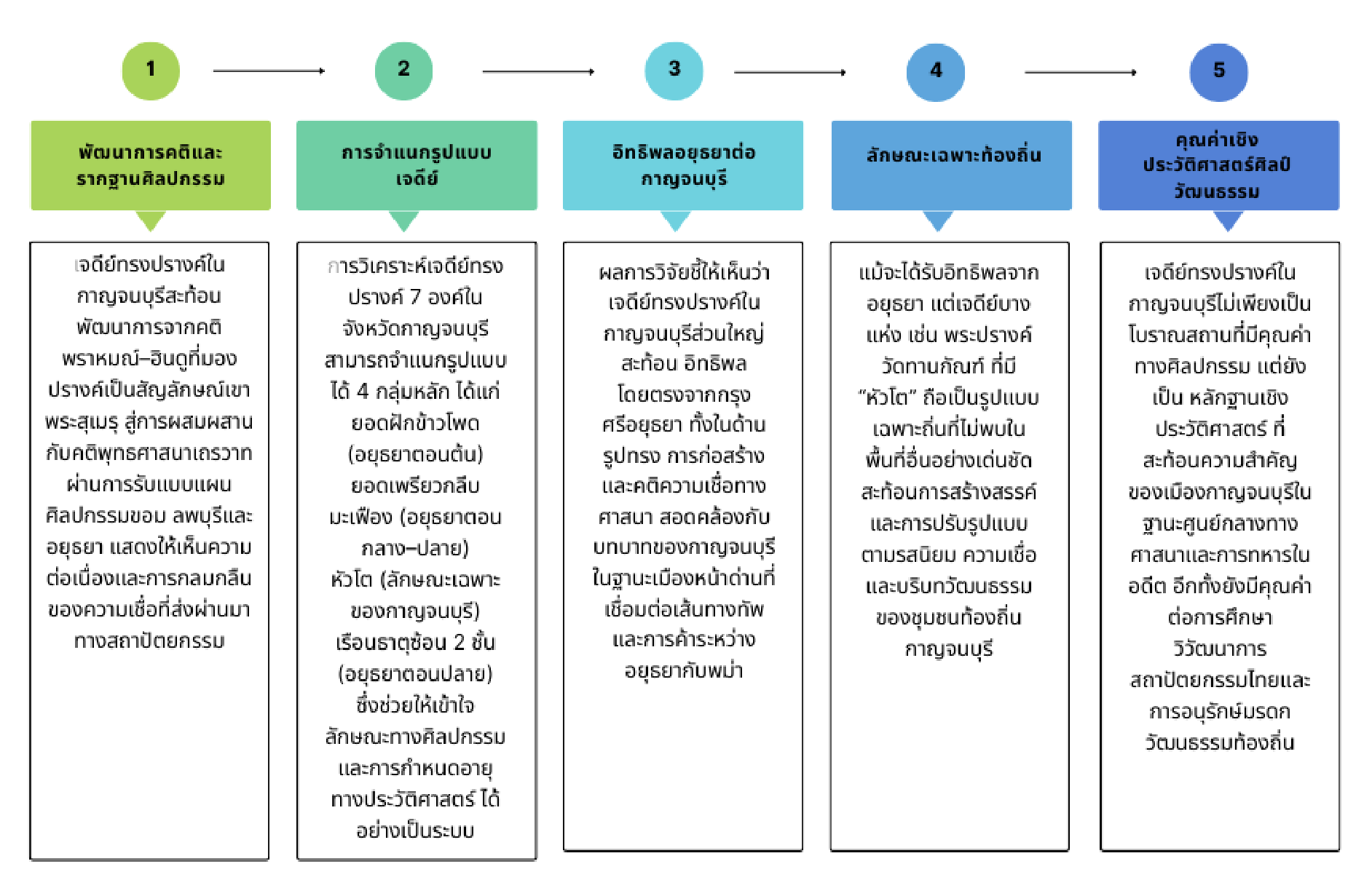
The analysis of prang-style stupas in Kanchanaburi Province is historical art research conducted through qualitative methodology. The objective of the study is to analyze the architectural characteristics of prang-style stupas in the province.
Research Methodology This study employed qualitative research methods, focusing on seven selected prang-style stupas in Kanchanaburi. Data were collected from both primary and secondary sources, including field surveys, documentary studies, and interviews with seven monks and local experts. The selection of the seven stupas was verified by three specialists in the field.
Research Findings The analysis revealed that the seven prang-style stupas studied are: (1) Wat Nang No Prang, (2) Wat Khao Rak Prang, (3) Wat Khun Phaen Prang, (4) Wat Inthararam Prang, (5) Wat Srakrabeung Prang, (6) Wat Than Kan Prang, and (7) the Three Pagodas. These stupas can be classified into four stylistic groups based on the design of their spires: 1) Corn-shaped spires: Wat Nang No Prang and Wat Khao Rak Prang, dating to the Early Ayutthaya period. 2) Slender spires with star fruit-shaped top: Wat Khun Phaen Prang, dating to the Middle Ayutthaya period, while Wat Inthararam Prang and Wat Srakrabeung Prang belong to the Late Ayutthaya period. 3) Large-headed prang: Wat Than Kan Prang, dating to the Late Ayutthaya period. And 4) Double-tiered base prang: The Three Pagodas, dating to the Late Ayutthaya period.
Conclusion The artistic features of prang-style stupas in Kanchanaburi reflect strong influences from Ayutthaya art and architecture, while also displaying distinctive local characteristics. Notably, the large-headed prang at Wat Than Kan demonstrates a unique form of local artistic development within the religious and cultural context of Kanchanaburi.
Article Details
References
กรมศิลปากร. (2515). คำให้การของกรุงเก่า คำให้การขุนหลวงหาวัด และพระราชพงศาวดารกรุงเก่า ฉบับหลวงประเสริฐอักษรนิติ์. พระนคร: คลังวิทยา.
กรมศิลปากร. (2546). นําชมอุทยานประวัติศาสตร์พระนครศรีอยุธยา. กรุงเทพมหานคร: ศรีเมืองการพิมพ์ จำกัด.
กลุ่มอนุรักษ์โบราณสถาน. (2557). โครงการจัดการความรู้ เรื่อง รูปแบบ ลวดลายประดับ และวัสดุก่อสร้างของพระปรางค์สมัยอยุธยา ประจำปีงบประมาณ 2557. รายงานวิจัย. สำนักศิลปากรที่ 3 พระนครศรีอยุธยา กรมศิลปากร กระทรวงวัฒนธรรม.
ประทีป เพ็งตะโก. (2564). ประทีปวิทรรศน์ รวมเรื่องโบราณคดีอยุธยา. กรุงเทพมหานคร: กรมศิลปากร.
พระปรางค์ (ปรางค์ประธาน) วัดพุทไธศวรรย์, [ออนไลน์]. แหล่งที่มา: https://go.ayutthaya.go.th
พระราชพงศาวดารกรุงศรีอยุธยา ฉบับพันจันทนุมาศ (เจิม). (2534). ใน ประชุมพงศาวดารฉบับกาญจนาภิเษก เล่ม 3. กรุงเทพมหานคร: กองวรรณกรรมและประวัติศาสตร์ กรมศิลปากร และกรมศิลปากร พระราช
พงศาวดารฉบับพระราชหัตถเลขา เล่ม 1. (2534). กรุงเทพมหานคร: กรมศิลปากร.
พระราชพงศาวดารกรุงศรีอยุธยา ฉบับพันจันทนุมาศ (เจิม). (2542). ใน ประชุมพงศาวดารฉบับกาญจนาภิเษก เล่ม 3. กรุงเทพมหานคร: กองวรรณกรรมและประวัติศาสตร์ กรมศิลปากร.
ฟ้อน เปรมพันธุ์ และสมชาย แสงชัยศรียากุล. (2561). ย้อนรอยกรุงเก่า ณ กาญจนบุรี. กาญจนบุรี: จังหวัดกาญจนบุรี.
ราชบัณฑิตยสถาน. (2526). พจนานุกรมฉบับราชบัณฑิตยสถาน. กรุงเทพมหานคร: ราชบัณฑิตยสถาน.
มิวเซียมไทยแลนด์. วัดไชยวัฒนาราม พระอารมหลวงคู่เมืองอยุธยา. [ออนไลน์]. แหล่งที่มา: https://www.museumthailand.com/th/3173/storytelling
สมเด็จพระเจ้าบรมวงศ์เธอ กรมพระยาดำรงราชานุภาพ. (2514). ตำนานพุทธเจดีย์. กรุงเทพมหานคร: แพร่พิทยา.
สันติ เล็กสุขุม. (2552). เจดีย์ ความเป็นมาและคำศัพท์เรียกองค์ประกอบเจดีย์ในประเทศไทย. พิมพ์ครั้ง ที่ 5. กรุงเทพมหานคร: มติชน.
สันติ เล็กสุขุม. (2547). ประวัติศาสตร์ศิลปะไทย (ฉบับย่อ) : การเริ่มต้นและการสืบเนื่องงานช่างในศาสนา. พิมพ์ครั้งที่ 3. กรุงเทพมหานคร: เมืองโบราณ.
สันติ เล็กสุขุม. (2550). ศิลปะอยุธยา: งานช่างหลวงแผ่นดิน. นนทบุรี: เมืองโบราณ.
อุทยานประวติศาสตร์เมืองสิงห์. (2550). เมืองกาญจนบุรีเก่า. กรุงเทพมหานคร: กรมศิลปากร.
