
Models of Conservation and Promotion of Lanna Dharma Chests as Cultural Heritage
Article Sidebar
Main Article Content
Abstract
This article has three main objectives: 1) to study the belief systems associated with Lanna Dharma chests as cultural heritage 2) to examine the contexts, problems, and current
conservation of Lanna Dharma chests in six temples within the study area; and 3) to propose models for the conservation and promotion of Lanna Dharma chests as cultural heritage.
Research Methodology This study adopts a qualitative research design and employs three methods: documentary research, in-depth interviews, and focus group discussions. The sample and its size consist of 18 key informants from temples in Chiang Mai, Lamphun, and
Lampang Provinces.
The findings reveal that: 1) Lanna dharma chests are containers for the Tipiṭaka and palm-leaf manuscripts. They reflect beliefs in merit-making and the perpetuation of Buddhism, originating from the dissemination of Buddhism into the Lanna region and developing into a
distinctive local art form. Their creation relies on the skills of carpentry, woodcarving, lacquer
gilding, and intricate Lai Rod Nam decoration. They are used in religious ceremonies as sacred symbols, and the tradition of making and using dharma chests has been transmitted through temples, communities, and local craftsmen. Although they are currently facing deterioration and a decline in successors, they still retain significant value as cultural heritage that must be preserved. 2) Field surveys reveal that Lanna dharma chests display a wide range of forms, such as vernacular Lanna types and hybrid forms that combine local and Ayutthaya artistic influences. Most are
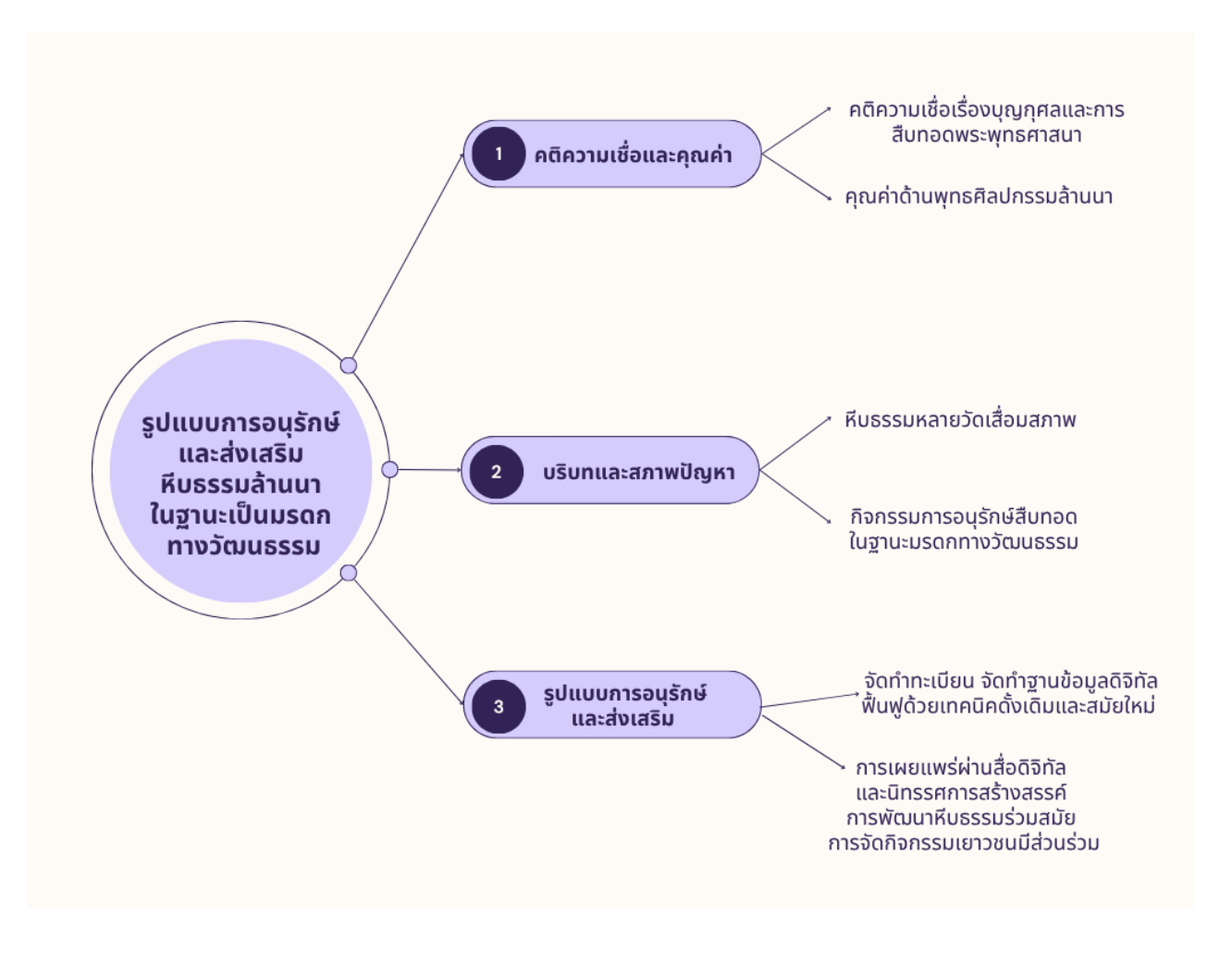
primarily wooden, decorated with simple local motifs, while other chests are adorned with carved ornament, gilded lacquer, Lai Rod Nam patterns, and colored glass inlays. However, many chests are in a state of decay, with peeling or faded surfaces, lack continuous restoration, and are not stored appropriately. 3) The proposed models for the conservation and promotion of Lanna dharma chests as cultural heritage consist of two main approaches (1) Conservation models – creating registries and digital databases, establishing learning centers and museums, and mobilizing funding from all sectors; and (2) Promotion models – disseminating knowledge through digital media and creative exhibitions, developing contemporary forms of dharma chests, and advocating for their registration as cultural heritage at both national and international levels.
Article Details
References
ก่องแก้ว วีระประจักษ์. (2549). สารานุกรมไทยสำหรับเยาวชนฯ เล่มที่ 31 แนวคิดเกี่ยวกับตู้พระธรรม. กรุงเทพมหานคร: มูลนิธิโครงการสารานุกรมไทยสำหรับเยาวชนฯ.
จักริน สูบกำปัง. (2555). ลายตู้พระธรรม. สารนิพนธ์. สาขาทัศนศิลป์ ศิลปะไทย มหาวิทยาลัยศิลปากร.
จักริน สูบกำปัง. (2555). ลายตู้พระธรรม. วิทยานิพนธ์ปริญญาศิลปบัณฑิต. สาขาทัศนศิลป์–ศิลปะไทย มหาวิทยาลัยศิลปากร.
ชัปนะ ปิ่นเงิน. (2552). จักกวาฬทีปนี: ต้นแบบทางความคิดพุทธลักษณ์ล้านนา. เชียงใหม่: สถาบันวิจัยสังคม มหาวิทยาลัยเชียงใหม่.
ชัยพร ภูทัตโต. (2529). การนำลวดลายไทยมาประยุกต์: จากตู้พระธรรมสู่โคมไฟ. วิทยานิพนธ์ศิลปะศาสตรมหาบัณฑิต มหาวิทยาลัยบูรพา.
นีรนุช นิรุตติศาสตร์. (2551). สวดพระมาลัย: กรณีศึกษาคณะนางรำหน้าศพ ตำบลทางเกวียน อำเภอแกลง จังหวัดระยอง. วิทยานิพนธ์ศิลปกรรมศาสตรมหาบัณฑิต สาขามานุษยดุริยางควิทยา มหาวิทยาลัยศรีนรินทรวิโรฒ.
พระมหาไพบูลย์ วิปุโล (เลิศฤทธิ์ธนะกุล). (2551). การศึกษาแนวคิดเกี่ยวกับเสนาสนะในพระพุทธศาสนา. วิทยานิพนธ์พุทธศาสตรมหาบัณฑิต มหาวิทยาลัยมหาจุฬาลงกรณราชวิทยาลัย.
พระมหาอุดม ปญฺญาโภ. (2547). การศึกษาวิเคราะห์พุทธศิลป์เชิงสุนทรียศาสตร์: ศึกษากรณีเฉพาะพระพุทธรูปสมัยอยุธยา. วิทยานิพนธ์พุทธศาสตรมหาบัณฑิต มหาวิทยาลัยมหาจุฬาลงกรณราชวิทยาลัย.
พระสุธีธรรมานุวัตร, พระมหาสุทิตย์ อาภากโร, เสนาะ ผดุงฉัตร. (2554). การศึกษาองค์ความรู้ทางพระพุทธศาสนาที่ปรากฏในคัมภีร์ธรรม วัดสูงเม่น จังหวัดแพร่. รายงานวิจัย. สถาบันวิจัยพุทธศาสตร์ มหาวิทยาลัยมหาจุฬาลงกรณราชวิทยาลัย.
มหาจุฬาลังกรณราชวิทยาลัย. (2539). พระไตรปิฎกภาษาไทย ฉบับมหาจุฬาลงกรณราชวิทยาลัย. กรุงเทพมหานคร: โรงพิมพ์มหาจุฬาลงกรณราชวิทยาลัย.
มูลนิธิสารานุกรมวัฒนธรรมไทย ธนาคารไทยพาณิชย์. (2542). สารานุกรมวัฒนธรรมไทย ภาคเหนือ 14: หีบธรรมล้านนา. กรุงเทพมหานคร: มูลนิธิสารานุกรมวัฒนธรรมไทย ธนาคารไทยพาณิชย์.
สถาบันวิจัยสังคม มหาวิทยาลัยเชียงใหม่. (2546). วัดเจ็ดยอด (มหาโพธาราม) ศิลปะยุคทองของล้านนา. (พิมพ์ครั้งที่ 2). เชียงใหม่: มิ่งเมือง.
สงวน รอดสุข. (2533). พุทธศิลป์สุโขทัย. กรุงเทพมหานคร: สำนักพิมพ์โอเดียนสโตร์.
เสนอ นิลเดช. (2537). ประวัติศาสตร์สถาปัตยกรรมไทย. กรุงเทพมหานคร: มหาวิทยาลัยธรรมศาสตร์.
สัญญา สุดล้ำเลิศ. (2528). การศึกษาภาพรามเกียรติ์จากตู้ไทยโบราณสมัยอยุธยาและธนบุรี. วิทยานิพนธ์ศิลปศาสตรมหาบัณฑิต มหาวิทยาลัยศิลปากร.
สำนักสื่อธรรมะ. (2060). หีดธัมม์ งานศิลป์ ถิ่นเหนือ. [ออนไลน์]. แหล่งที่มา: http://dhamma-media.blogspot.com/2017/09/blog-post_65.html
สิริวัฒน์ คำวันสา. (2534). ประวัติศาสตร์พระพุทธศาสนาในประเทศไทย. กรุงเทพมหานคร: มหาจุฬาลงกรณราชวิทยาลัย.
สุกฤต อนันนตชัยยง. (2545). การศึกษาเปรียบเทียบการก่อสร้างบ้านพักอาศัยด้วยชิ้นคอนกรีตสำเร็จรูป ระบบเสา–คาน กับการก่อสร้างทั่วไป: กรณีศึกษา หมู่บ้านคุณาลัย บางขุนเทียน. วิทยานิพนธ์ สถาปัตยกรรมศาสตรมหาบัณฑิต จุฬาลงกรณ์มหาวิทยาลัย.
อดุลย์ เป็งกาสิทธิ์. (2542). การศึกษารูปแบบหอไตรในวัฒนธรรมล้านนา. วิทยานิพนธ์ศิลปะศาสตรมหาบัณฑิต มหาวิทยาลัยศิลปากร.
