
Creative Patterns and Inhering the Art of Sculpture of Lampang Temple
Article Sidebar
Main Article Content
Abstract
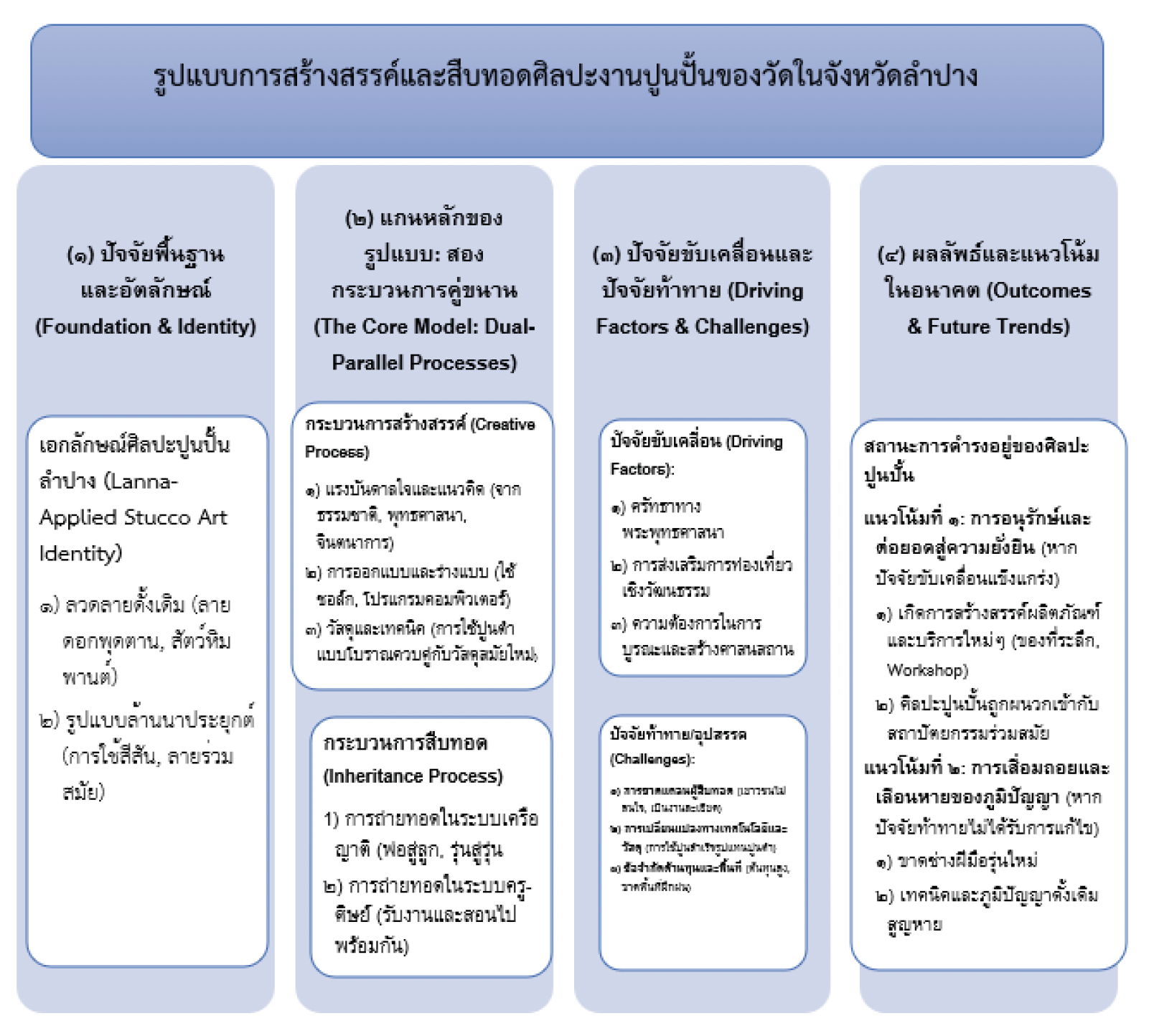
This academic article has three main objectives: 1) to study the history and identity of stucco art, 2) to explore the creation and transmission of stucco art, and 3) to analyze and propose creative and inheritable models of stucco art in temples in Lampang Province. The research methodology employed qualitative and documentary research, including in-depth interviews and analysis of data from open-ended questionnaires. Descriptive content analysis was applied to information obtained from 6 key informants.
The findings reveal that: 1) The history and identity of stucco art in Lampang temples are characterized by intricate decorations, including floral patterns and legendary creatures from the Himavanta forest in traditional Lanna art style. Temple doors, windows, and vihāras are adorned with detailed stucco motifs and vase sculptures drawn from literature, blending traditional
techniques with contemporary designs. 2) The creation and transmission of stucco art in Lampang
temples are systematically planned. Skilled craftsmen, predominantly using local materials,
produce valuable works of art. The techniques and knowledge are passed down through
observation and skill practice within kinship networks, continuing from the past to the present.
3) The creative and transmissible models of stucco art in Lampang temples are distinguished by figurative sculptures of deities, mythical creatures such as Garuda and Nāga, and depictions of Thai kings. Rooted in religious beliefs, these works are preserved and promoted for future generations as invaluable heritage while also contributing to cultural tourism and integrating with contemporary design.
Article Details
References
ชาญณรงค์ พรรุ่งโรจน์. (2546). ความคิดสร้างสรรค์. กรุงเทพมหานคร: สำนักพิมพ์แห่งจุฬาลงกรณ์ มหาวิทยาลัย.
โชติ กัลยาณมิตร. (2539). สถาปัตยกรรมแบบไทยเดิม, สมาคมสถาปนิกสยามในพระบรมราชูปถัมภ์. กรุงเทพมหานคร: มหาวิทยาลัยธรรมศาสตร์ ท่าพระจันทร์.
ณัฐนีภรณ์ น้อยเสงี่ยม. (2563). การค้นหาอัตลักษณ์พุทธสถาปัตยกรรมเพื่อส่งเสริมการท่องเที่ยว เชิงวัฒนธรรมในพื้นที่เทศบาลนครสงขลา จังหวัดสงขลา. รายงานการวิจัย. คณะสถาปัตยกรรมศาสตร์ มหาวิทยาลัยเทคโนโลยีราชมงคลศรีวิชัย.
ดิลก ดิลกานนท์. (2534). การฝึกทักษะการคิดเพื่อส่งเสริมความคิดสร้างสรรค์. วิทยานิพนธ์การศึกษาดุษฎีบัณฑิต มหาวิทยาลัยศรีนครินทรวิโรฒ.
ไตรเทพ สหะขันธ์. (2562). ศึกษาอัตลักษณ์และความเชื่อในจิตรกรรมฝาผนังแบบพื้นบ้าน เพื่อพัฒนาผลิตภัณฑ์สร้างสรรค์. วิทยานิพนธ์ศิลปศาสตรมหาบัณฑิต มหาวิทยาลัยมหาสารคาม.
ทิศนา แขมมณี. (2550). รูปแบบการเรียนการสอน: ทางเลือกที่หลากหลาย. กรุงเทพมหานคร: สํานักพิมพ์แห่งจุฬาลงกรณ์มหาวิทยาลัย.
เทวัญ เอกจันทร์. (2563). การสังเคราะห์องค์ความรู้พุทธศิลปกรรมในล้านนา. รายงานการวิจัย. สถาบันวิจัยพุทธศาสตร์ มหาวิทยาลัยมหาจุฬาลงกรณราชวิทยาลัย.
ประดับ จันทร์สุขศรี. (2542). กระบวนการคิดเพื่อการเขียนสารคดี. กรุงเทพมหานคร: สถาบันราชภัฏสวนดุสิต.
ปราณี สุรสิทธิ์. (2541). การเขียนเชิงสร้างสรรค์เชิงวารสาร. กรุงเทพมหานคร: สำนักพิมพ์แสงดาว.
พูนชัย ปันธิยะ. (2562). พุทธศิลป์ล้านนา แนวคิด คุณค่า เพื่อเสริมสร้างจริยธรรมทางสังคม: กรณีศึกษาจังหวัดเชียงใหม่และลำพูน. วารสารมหาจุฬานาครทรรศน์. 6(9), 4473-4487. https://so03.tci-thaijo.org/index.php/JMND/article/view/205192
เมธาวี ธรรมชัย. (2562). การสืบทอดและการสร้างงานช่างพุทธศิลป์ล้านนา: กรณีศึกษางาน ช่างฝีมือพระเบญจิมิน สุตา จากงานพุทธศิลป์วัดหาดนาค ตำบลสบเตี๊ยะ อำเภอจอมทอง จังหวัดเชียงใหม่. วารสารพุทธศาสตร์ศึกษา. 10(1), 51-66. https://so02.tci-thaijo.org/index.php/JBS/article/view/167120
รัตนะ บัวสนธ์. (2552). การวิจัยและพัฒนานวัตกรรมการศึกษา. กรุงเทพมหานคร: คำสมัย.วิกิพีเดีย. (3 กรกฎาคม 2568). การสร้างสรรค์. สืบค้นเมื่อ 10 พฤศจิกายน 2567, จาก : https://th.wikipedia. org/wiki/การสร้างสรรค์
Brown, Warren B., and Moberg, Denis J.. (1980). Organizational Theory and Management : A Macro Approach. New York: John Wiley & Sons.
Keeves P.J.. (1988). Educational research, methodology and measurement :An international handbook. Oxford: Pergamon Press.
Keeves, P. J.. (1988). Model and model building Education Research, methodology and measurement : An International Handbook. Oxford : Pegamon Press.
Smith, R. H. and Others. (1980). Management: Making Organizations Perform, New York: Macmillan.
