
Sacred Trees as Sites of Enlightenment and Functional Space
Article Sidebar
Main Article Content
Abstract
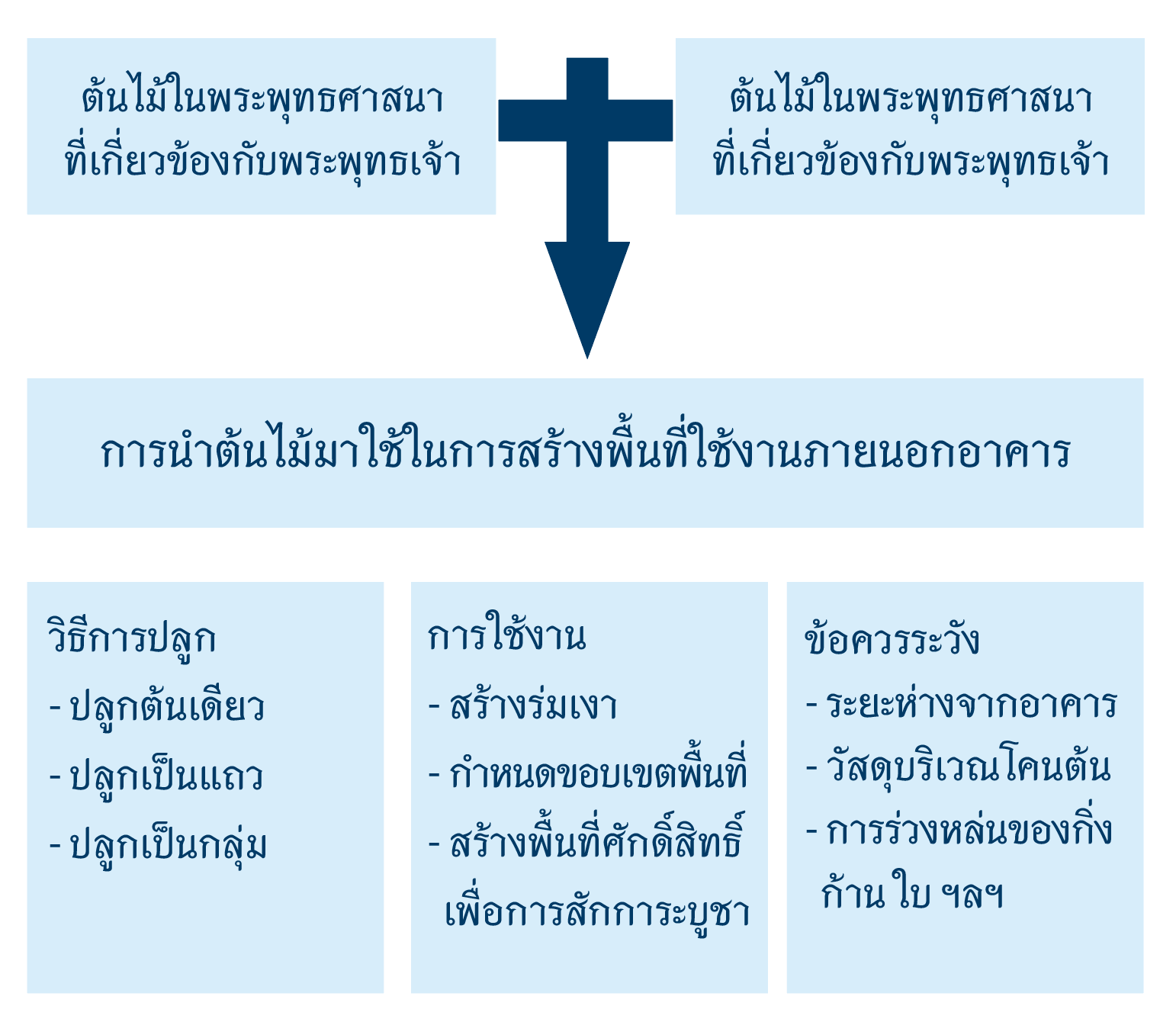
The Bodhi Tree is the tree of enlightenment of the Buddha, including other trees related to the Buddha, such as the Sala Tree, Indian Oak, etc. These trees have been planted in the temple as a symbol of Buddhism and memorial to the Buddha. They also help create shade and functional space under the trees. This article aims to study trees in Buddhism which are considered sacred trees and to suggest how to create functional spaces by those trees. Information about trees related to the Buddha is collected through document research in order to know the names of the trees. The most prominent trees are selected as examples, to combine botanical characteristics, then suggest guidelines for using trees in the design and creation of outdoor areas. Trees are an important element used to create space, connect spaces and imply the boundaries of an area. From the Tipitaka it is found that trees are one of the Buddha’s places, and the place where all Buddhas attained enlightenment is under the tree. There are six important trees, namely Bodhi tree, Sala tree, Banyan tree, Indian oak, Milky tree, and Mango tree, which are large and long-lived trees. When planting, it should be considered in terms of utility and creation of space for use, taking into account the botanical and physical characteristics of the tree, the use of space under the tree, as well as the impact and maintenance. To enable the planted trees to grow well and make efficient use of the area under the trees.
Article Details
References
กรมราชเลขานุการ. (ม.ป.ป.) เอกสารกรมราชเลขาธิการ รัชกาลที่ 5 กรมราชเลขานุการ รล 8.2ค/5 เรื่องต้นโพธิ์ (21 ม.ค. 123 – 23 ส.ค. 129). หอจดหมายเหตุแห่งชาติ.
จามรี อาระยานิมิตสกุล. (2558 ก). พืชพันธุ์ในงานภูมิสถาปัตยกรรม. กรุงเทพมหานคร: โรงพิมพ์แห่งจุฬาลงกรณ์มหาวิทยาลัย.
จามรี อาระยานิมิตสกุล. (2558 ข). ภูมิสถาปัตยกรรมเบื้องต้น. กรุงเทพมหานคร: โรงพิมพ์แห่งจุฬาลงกรณ์มหาวิทยาลัย.
เต็ม สมิตินันทน์. (2547). ชื่อพรรณไม้แห่งประเทศไทย. ฉบับแก้ไขเพิ่มเติม. กรุงเทพมหานคร: สำนักงานหอพรรณไม้ สำนักวิจัยการอนุรักษ์ป่าไม้และพันธุ์พืช กรม
อุทยานแห่งชาติ สัตว์ป่า และพันธุ์พืช กระทรวงทรัพยากรธรรมชาติและสิ่งแวดล้อม.
พระพรหมคุณาภรณ์ (ป.อ. ปยุตฺโต). (2556). พจนานุกรมพุทธศาสน์ ฉบับประมวลศัพท์. พิมพ์ครั้งที่ 21. กรุงเทพมหานคร: สำนักพิมพ์ผลิธัมม์.
พุทธทาส อินทปญฺโญ. (2515). พุทธประวัติจากพระโอษฐ์. พิมพ์ครั้งที่ 8. กรุงเทพมหานคร: ธรรมทานมูลนิธิ.
มหาจุฬาลงกรณราชวิทยาลัย. (2539). พระไตรปิฎกภาษาไทย ฉบับมหาจุฬาลงกรณราชวิทยาลัย. กรุงเทพมหานคร: โรงพิมพ์มหาจุฬาลงกรณราชวิทยาลัย.
การปลูกต้นศรีมหาโพธิ์ วัดเบ็ญจมบพิตร์. ราชกิจจานุเบกษา เล่ม 17, 12 สิงหาคม 2444.
ราชบัณฑิตยสถาน. (2546). อนุกรมวิธานพืช อักษร ก. พิมพ์ครั้งที่ 2. กรุงเทพมหานคร: ราชบัณฑิตยสถาน.
ราชันย์ ภู่มา. (2559). สารานุกรมพืชในประเทศไทย (ฉบับย่อ) เฉลิมพระเกียรติสมเด็จพระเทพรัตนราชสุดาฯ สยามบรมราชกุมารี ทรงเจริญพระชนมายุ 60 พรรษา.
กรุงเทพมหานคร: สำนักงานหอพรรณไม้ สำนักวิจัยการอนุรักษ์ป่าไม้และพันธุ์พืช กรมอุทยานแห่งชาติ สัตว์ป่า และพันธุ์พืช กระทรวงทรัพยากรธรรมชาติและสิ่งแวดล้อม.
วีระชัย ณ นคร. (2562). พุทธพฤกษ์ พรรณไม้ในพุทธประวัติ. กรุงเทพมหานคร: บริษัทอมรินทร์พริ้นติ้งแอนด์พับลิชชิ่งจำกัด (มหาชน).
ศศิยา ศิริพานิช. (2558). ภูมิทัศน์พื้นฐาน. พิมพ์ครั้งที่ 2. นครปฐม: คณะเกษตร กำแพงแสน และ ภาควิชาพืชสวน คณะเกษตร กำแพงแสน มหาวิทยาลัยเกษตรศาสตร์ วิทยาเขตกำแพงแสน.
สมเด็จพระญาณสังวร สมเด็จพระสังฆราช สกลมหาสังฆปริณายก. (2552). ธรรมาภิธาน พจนานุกรมคำสอนพระพุทธศาสนา. สืบค้นเมื่อ 25 มกราคม 2564, แหล่งที่มา http://www.sangharaja.org/ธรรมาภิธาน/.
สำนักงานราชบัณฑิตยสภา. (2559). อนุกรมวิธานพืช อักษร ฆ-จ. กรุงเทพมหานคร: สำนักงานราชบัณฑิตยสภา.
อุษา กลิ่นหอม. (2561). สมุนไพรในพระไตรปิฎก. กรุงเทพมหานคร: มูลนิธิสุขภาพไทย.
เอื้อมพร วีสมหมาย, ศศิยา ศิริพานิช, อลิศรา มีนะกนิษฐ, ณัฏฐ พิชกรรม. (2542). พรรณไม้ในงานภูมิสถาปัตยกรรม. กรุงเทพมหานคร: สมาคมภูมิสถาปนิกประเทศไทย.
เอื้อมพร วีสมหมาย และปณิธาน แก้วดวงเทียน. (2552). ไม้ป่ายืนต้นของไทย 1. พิมพ์ครั้งที่ 2. กรุงเทพมหานคร: โรงพิมพ์ เอช เอ็น กรุ๊ป จำกัด.
Harris, C. M. (2006). Dictionary of Architecture & Construction. Fourth Edition. New York: McGraw-Hill.
Harris, C. W. and Dines, N. T. (1998). Time-Saver Standards for Landscape Architecture: Design and Construction Data. Second Edition. U.S.A.: McGraw-Hill.
