Buddhist Leadership and Sufficiency Economy Philosophy in Contemporary Organizational Management
DOI:
https://doi.org/10.65680/jahs.v2i1.7601Keywords:
Buddhist leadership, Sufficiency Economy Philosophy, contemporary organizational management, sustainability, Buddhist Sufficiency LeadershipAbstract
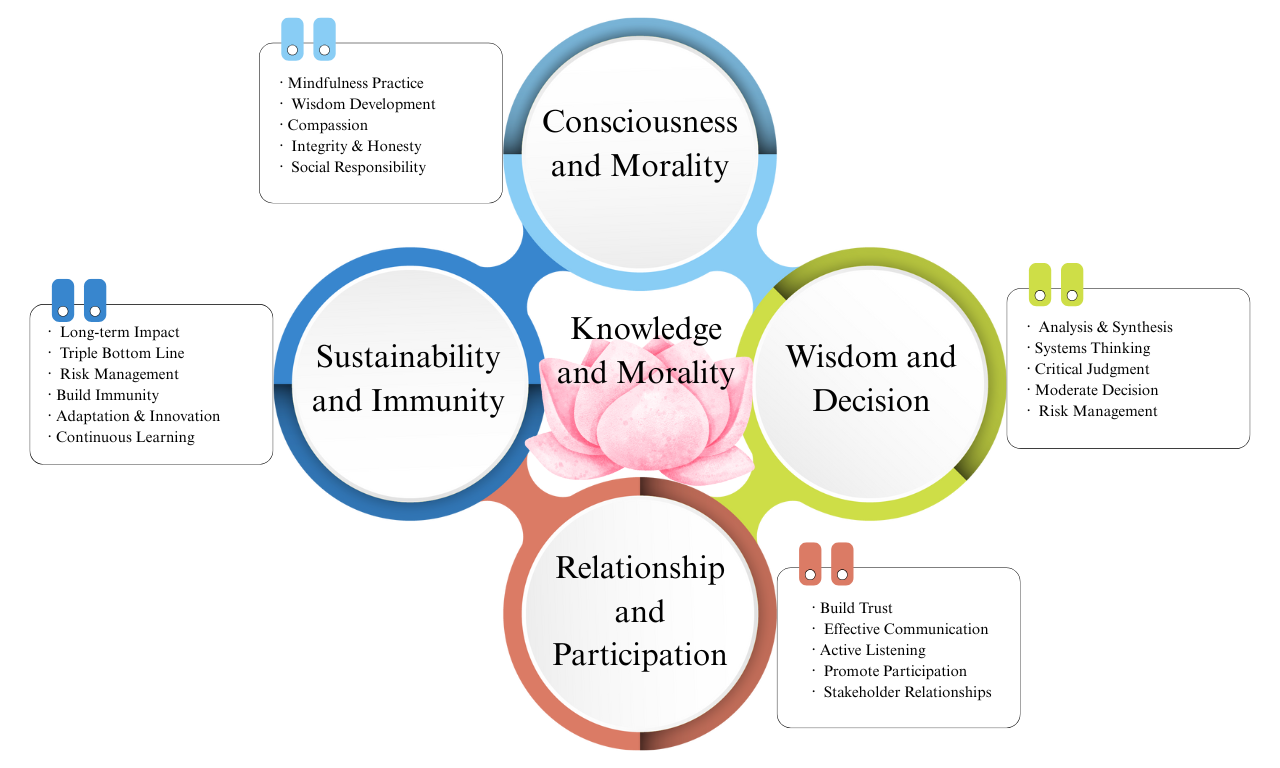
This academic article presents the integration of Buddhist leadership and Sufficiency Economy Philosophy in the context of contemporary organizational management. In an era where organizations face challenges from rapid technological, social, and environmental changes, applying Buddhist principles together with Sufficiency Economy Philosophy has become a management approach that creates sustainability and balance. This article analyzes the concept of Buddhist leadership that emphasizes virtue, compassion, and wisdom, alongside the principles of sufficiency comprising moderation, reasonableness, and self-immunity. This study demonstrates that the integration of both concepts can create a management framework suitable for Thai and Eastern contexts, particularly in developing leaders with consciousness, consideration of long-term impacts, and the ability to balance business success with social responsibility. The article presents the "Buddhist Sufficiency Leadership Model" (BSLM) consisting of four main dimensions: Consciousness and Morality Dimension, Wisdom and Decision-Making Dimension, Relationship and Participation Dimension, and Sustainability and Immunity Dimension, which can be applied in developing leaders and organizations in the 21st century.
References
Chaikaew, P., & Narenthirakul, P. (2023). Buddhist leadership and organizational mindfulness: A framework for sustainable business management in Thailand. Journal of Buddhist Studies, 21(2), 145–168. https://doi.org/10.2978/jbs.2023.145
Jampawal, T. (2023). Sufficiency Economy Philosophy: A management framework for modern executives. Journal of Applied Humanities Studies, 1(1), 20–30. https://so09.tci-thaijo.org/index.php/J_AHS/article/view/6641
Nivatvongs, S. (2023). Buddhist principles in contemporary leadership: Integrating mindfulness and compassion in organizational settings. Asian Journal of Management Studies, 15(3), 234–256. https://doi.org/10.5432/ajms.2023.234
Piboolsravut, P. (2023). Sufficiency Economy Philosophy and sustainable development: Thailand's path to resilience. Journal of Sustainable Development, 16(4), 78–95. https://doi.org/10.5539/jsd.v16n4p78
Roengnapha, K., & Thongchai, S. (2023). Compassionate leadership in Thai organizations: The role of Buddhist values in employee engagement. International Journal of Human Resource Management, 34(12), 2341–2367. https://doi.org/10.1080/09585192.2023.2341234
Srisathan, W., Ketkaew, C., & Naruetharadhol, P. (2023). Sufficiency Economy Philosophy and business sustainability: Evidence from Thai SMEs. Sustainability, 15(8), 6789. https://doi.org/10.3390/su15086789
Suwanrada, W., Promphakping, B., & Kamnuansilpa, P. (2024). Mindfulness-based leadership development: A Buddhist approach for organizational transformation. Journal of Leadership Studies, 18(1), 45–67. https://doi.org/10.1002/jls.21845
Thanalerdsopit, S., & Sapsomboon, W. (2024). Building organizational resilience through Sufficiency Economy Philosophy: A case study of Thai enterprises during economic uncertainty. Asian Business & Management, 23(2), 198–223. https://doi.org/10.1057/s41291-024-00234-5
Thongpakdee, A., & Khamphrong, N. (2024). The application of Buddhist principles in team building and organizational culture: Perspectives from Thai managers. Journal of Asian Business and Economic Studies, 31(1), 112–134. https://doi.org/10.1108/JABES-03-2024-0112
Downloads
Published
How to Cite
Issue
Section
License
Copyright (c) 2024 Journal of Applied Humanities Studies

This work is licensed under a Creative Commons Attribution 4.0 International License.
Published articles are copyrighted by the Journal of Applied Humanities Studies.
The contents of each article in this academic journal represent the personal opinions of the individual authors and are not affiliated with the Journal of Applied Humanities Studies or any other editorial team within the publishing house. The responsibility for all content of each article rests with the individual authors. Any errors or omissions are solely the responsibility of each individual author.