Healing the Mind: Buddhist Mental Health in Hospitals
DOI:
https://doi.org/10.65680/jahs.v1i2.6756Keywords:
Mental health, Buddhism, mindfulness, hospitals, integrationAbstract
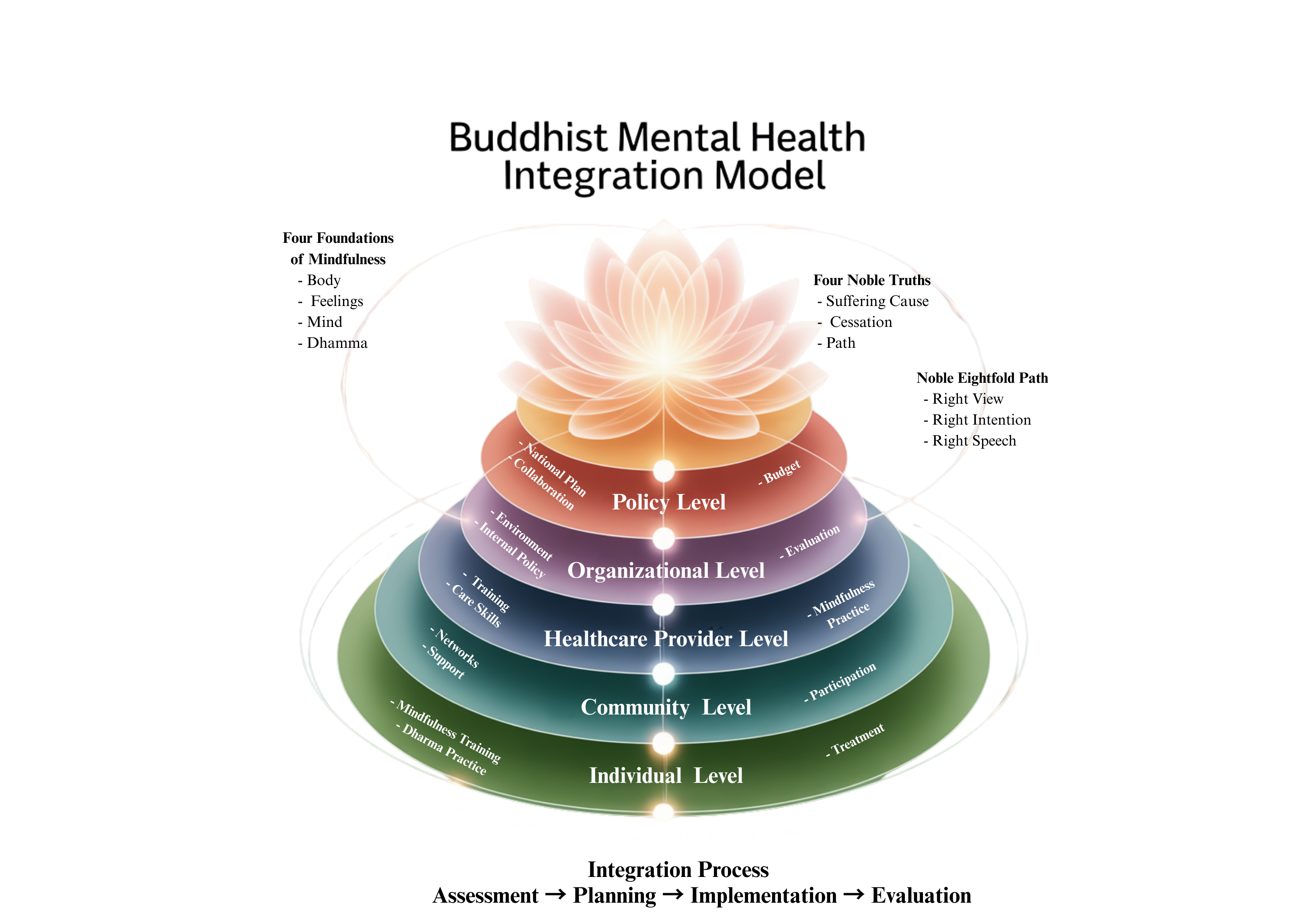
This study focuses on analyzing the integration of Buddhist principles with mental health care in Thai hospitals through literature review and document analysis. The study found that Buddhist principles can significantly enhance the effectiveness of mental health treatment in hospitals. The application of mindfulness, the Four Noble Truths, and the Noble Eightfold Path in treating mental health patients shows interesting results, particularly in reducing depression, anxiety, and improving patients' quality of life. This study presents an integration model that connects Buddhist concepts with contemporary mental health care to create a treatment system that aligns with Thai cultural context and responds to patients' spiritual needs. The study results show that such integration not only helps reduce clinical symptoms but also enhances psychological resilience, reduces social stigma, and increases treatment satisfaction among patients and families. Implementing this approach requires appropriate preparation of medical personnel, creating conducive environments, and developing comprehensive support systems.
References
Aphipanyo, S. (2017). Mental health awareness in Buddhism. Asia Pacific Journal of Religions and Cultures, 1(1), 65–73.
Burnard, P., & Naiyapatana, W. (2004). Views of mental illness and mental health care in Thailand: A report of an ethnographic study. International Journal of Nursing Studies, 41(7), 755–765.
Channuwong, S., Ruksat, S., & Ploychum, S. (2018). An integration of Buddhist teachings in stress management. Journal of Community Development Research, 11(4), 148–158.
Channuwong, S., Ruksat, S., & Srivinayaphon, S. (2022). Buddhist teachings for improving mental health during the COVID-19 pandemic. The Journal of Behavioral Science, 17(2), 29–41.
Ford, T., Mansfield, K. L., Markham, A., McManus, S., Sadler, K., Rothwell, H., & Pitman, A. (2020). Buddhism and depressive symptoms among married women in urban Thailand. International Journal of Psychology and Religion, 30(2), 112–127.
Kamonnet, W., Burin, S., Dutsadee, J., & Pichet, U. (2022). Development of community mental health infrastructure in Thailand: From the past to the COVID-19 pandemic. Consortium Psychiatricum, 3(3), 98–109.
Langgapin, L., Surapandit, K., & Phrommahachoti, P. (2024). Effectiveness of the Buddhist-based elderly mental health counseling training program for Thai health volunteer monks. Journal of Buddhist Mental Health, 15(12), 1472–1489.
Lertladaluck, K., Suppalarkbunlue, W., Moriguchi, Y., & Chutabhakdikul, N. (2021). School-based mindfulness intervention improves executive functions and self-regulation in preschoolers at risk. Developmental Psychology, 57(8), 1314–1325.
Pothisiri, W., & Vicerra, P. M. (2021). Religiosity and mental and behavioural health among community-dwelling middle-aged and older adults in Thailand: Results of a longitudinal national survey in 2015–2020. BMC Public Health, 21(1), Article 1842. https://doi.org/10.1186/s12889-021-11898-8
Ratanasiripong, P., Siri, S., Hanklang, S., Chumchai, P., & Galvan, F. (2022). Factors related to mental health and quality of life among college and university teaching professionals in Thailand. Mahidol University Journal of Public Health, 54(1), 45–56.
Saipetch, V. (2023). Buddhist mental health: Integration of Buddhist principles with contemporary mental health care. Journal of Applied Humanities Studies, 1(1), 1–19. https://so09.tci-thaijo.org/index.php/J_AHS/article/view/6639
Wiwattanaworaset, P., & Pitanupong, J. (2021). Mental health among hospital staff during the COVID-19 pandemic in a Thai university hospital. Journal of the University of Malaya Medical Centre, 1, 26–33.
Downloads
Published
How to Cite
Issue
Section
License
Copyright (c) 2023 Journal of Applied Humanities Studies

This work is licensed under a Creative Commons Attribution 4.0 International License.
Published articles are copyrighted by the Journal of Applied Humanities Studies.
The contents of each article in this academic journal represent the personal opinions of the individual authors and are not affiliated with the Journal of Applied Humanities Studies or any other editorial team within the publishing house. The responsibility for all content of each article rests with the individual authors. Any errors or omissions are solely the responsibility of each individual author.