
Effective of Scientific Game for Evaluating of Learning Achievement in Title Living Organisms Unit of 1th year Students at Thanomsitwitthaya School
Article Sidebar
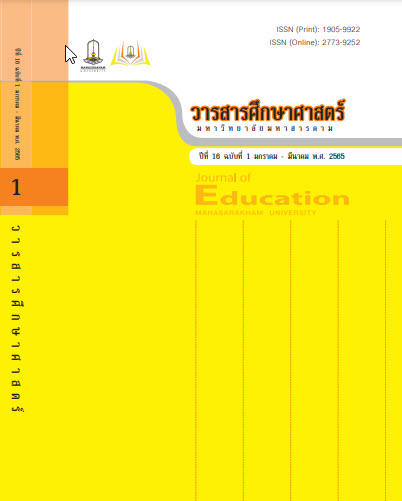
Main Article Content
Abstract
This study aimed to: 1) examine the effectiveness of science games applied in learning course ‘Unit of Living Organisms’ for 1th year students to be effective according to the 80/80 criteria, 2) evalvate learning achievement of science subject from science
games-based activities, and 3) determine the satisfaction of students toward application of science games-based. Simple rendom sampling method was used and twenty-six Mathayomsuksa 1/2 students in first semester of academic year of 2020 from Thanomsit Witthaya School, Pak Chong District, Nakhon Ratchasima province were Selected in this study.
The t-test was used to analyze the different of mean Score of learning achievement data.The results show that science games-based learning management plan applied in learning course ‘Unit of Living Organisms’ for 1th year students had effectiveness for 83.53/82.82, it was higher than standard criterion of 80/80. The comparison between pre-test and post-test scores present that the learning achievement of students was significantly higher than the pre-test p < 0.01. In addition. The students had highly satisfied toward science games-based activities. This research also found that this science games-based learning management is an alternative approach that enhances the students’ enjoyment, relaxation, skill development along with learning, has developed an idea, provide opportunities for learners to participate in performing activities, competitions and challenges and students exchange knowledge with others. better learning in Science make the students and improve the students’ learning achievement.
Downloads
Article Details

This work is licensed under a Creative Commons Attribution-NonCommercial-NoDerivatives 4.0 International License.
References
กระทรวงศึกษาธิการ. (2551). เอกสารประกอบหลักสูตรสาระการเรียนรู้วิทยาศาสตร์ คู่มือการจัดการเรียนรู้กลุ่มสาระการเรียนรู้วิทยาศาสตร์. กรุงเทพฯ: องค์การรับส่งสินค้าและพัสดุภัณฑ์.
กระทรวงศึกษาธิการ. (2560). ตัวชี้วัดและหลักสูตรแกนกลาง กลุ่มสาระการเรียนรู้วิทยาศาสตร์ (ฉบับปรับปรุง พ.ศ. 2560) ตามหลักสูตรแกนกลางการศึกษาขั้นพื้นฐานพุทธศักราช 2551.กรุงเทพฯ: โรงพิมพ์ชุมนุมสหกรณ์การเกษตรแห่งประเทศไทยจำกัด.
กุลธิดา ชูเสน และกาญจนา ธนนพคุณ. (2560). การใช้เกมเพื่อพัฒนาทักษะกระบวนการทางวิทยาศาสตร์ เรื่อง พฤติกรรมบางประการของสัตว์ ของนักเรียนชั้นประถมศึกษาปีที่ 4. วิทยานิพนธ์ มหาบัณฑิต, มหาวิทยาลัยราชภัฏพิบูลสงคราม, พิษณุโลก.
ชลทิพย์ จันทร์จำ ปาและคณะ. (2562). การพัฒนาเกมการศึกษาเพื่อส่งเสริมการเรียนรู้เรื่อง การสืบพันธุ์ของพืชดอกและการเจริญเติบโต สำ หรับนักเรียนชั้นมัธยมศึกษาปีที่ 5. วิทยานิพนธ์มหาบัณฑิต, มหาวิทยาลัยราชภัฏสวนสุนันทา, กรุงเทพฯ.
ฐิตา วัจนาคมกุล. (2555). การสอนโดยใช้เกมเพื่อพัฒนาผลสัมฤทธิ์ทางการเรียนคณิตศาสตร์ เรื่องจำนวนนับของนักเรียนชั้นประถมศึกษาปีที่ 1. วิทยานิพนธ์มหาบัณฑิต, มหาวิทยาลัยราชภัฏสงขลา, สงขลา.
ทิศนา แขมมณี. (2553). ศาสตร์การสอน. (พิมพ์ครั้งที่ 13). กรุงเทพฯ: โรงเรียนพิมพ์จุฬาลงกรณ์มหาวิทยาลัย.
พันธ์ ทองชุมนุม. (2547). การสอนวิทยาศาสตร์ระดับประถมศึกษา. กรุงเทพฯ: โอเดียน สโตร์.
พรวสันต์ มาเม่น. (2563). ผลการพัฒนากิจกรรมเกม Kahoot เรื่องระบบนิเวศชั้นประถมศึกษาปีที่ 6. วิทยานิพนธ์มหาบัณฑิต, มหาวิทยาลัยนเรศวร, พิษณุโลก.
สถาพร ปิ่นทอง. (2559). การศึกษาผลสัมฤทธิ์ทางการเรียนวิชาวิทยาศาสตร์ เรื่อง อาหารและสารอาหารของนักเรียนชั้นมัธยมศึกษาปีที่ 2 ด้วยวิธีการสอนแบบเกมศึกษา. วิทยาศาสตรมหาบัณฑิต,มหาวิทยาลัยรามคำ แหง, กรุงเทพฯ.
สุคนธ์ สินธพานนท์. (2551). นวัตกรรมการเรียนการสอนเพื่อพัฒนาคุณภาพของเยาวชน. (พิมพ์ครั้งที่ 2). กรุงเทพฯ: โรงพิมพ์ 9119 เทนนิคพริ้นติ่ง.
อรรถพร คำ คม. (2546). การให้บริการสินเชื่อของธนาคารอาคารสงเคราะห์: ศึกษาจากความคิดเห็นของผู้ใช้บริการฝ่ายกิจการสาขากรุงเทพและปริมณฑล. วิทยานิพนธ์มหาบัณฑิต, มหาวิทยาลัยเกษตรศาสตร์.
อังคณา ลังกาวงศ์. (2552). ความสามารถในการแก้ปัญหาของนักเรียนช่วงชั้นที่ 3 ที่ได้รับการสอนโดยเสริมเกมวิทยาศาสตร์. วิทยานิพนธ์มหาบัณฑิต, มหาวิทยาลัยเชียงใหม่, เชียงใหม่.
Kara, Y. (2008). Comparing the impacts of tutorial and edutainment software programs on students’ achievements, misconceptions, and attitudes towards biology. Retrieved October 12, 2019, from http://eric.ed.gov
Mahmoudia, H., Koushafarb, M., Saribagloob, J. A. and Pashavia, G. (2015). The effect of computer games on speed, attention and consistency of learning mathematics among students. Aurmia University, Faculty of Literature & Humanities, Urmia, 57159-44514, Iran.
Partovi, T., & Razavi, M. R. (2019). The effect of game-based learning on academic achievement motivation of elementary school students. Department of Educational Sciences, Taybad Branch, Islamic Azad University, Taybad, Iran.
Pinter, D.K. (1977). The effects of an academic game on the spelling achievement of third grades. Dissertation Abstracts International, 38(8), 710.
