
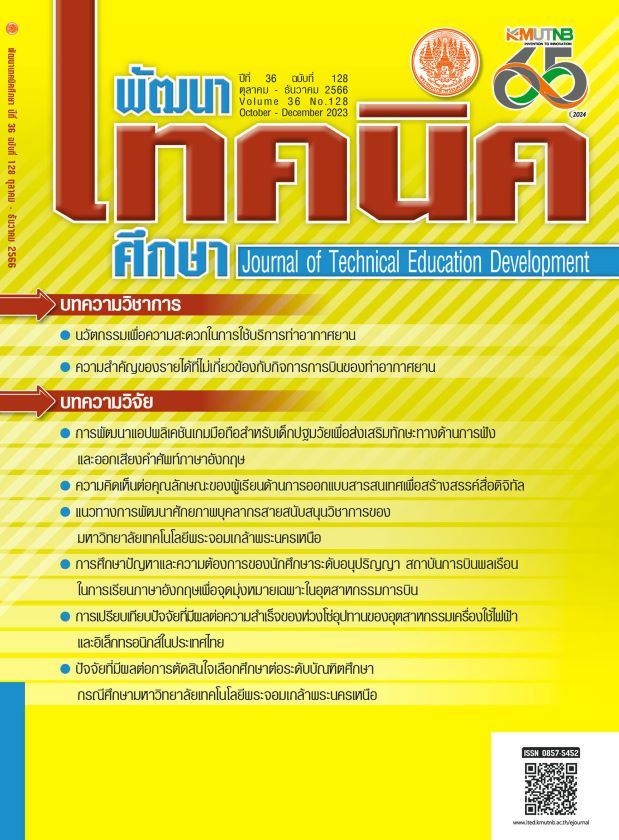
การศึกษาปัญหาและความต้องการของนักศึกษาระดับอนุปริญญา สถาบันการบินพลเรือนในการเรียนภาษาอังกฤษ เพื่อจุดมุ่งหมายเฉพาะในอุตสาหกรรมการบิน
Article Sidebar
Main Article Content
บทคัดย่อ
ในปัจจุบันหลักสูตรการเรียนการสอนของสถาบันการบินพลเรือนมีรายวิชาภาษาอังกฤษเพื่อจุดมุ่งหมายเฉพาะที่มีเนื้อหาเฉพาะทางด้านการบิน และมีการเรียนการสอนเป็นภาษาอังกฤษทั้งหมด ซึ่งอาจเป็นอุปสรรคในการเรียนภาษาอังกฤษเพื่อจุดมุ่งหมายของนักศึกษาระดับอนุปริญญาได้ ผู้วิจัยจึงกำหนดวัตถุประสงค์ในการวิจัยดังนี้ 1) เพื่อศึกษาปัญหาและความต้องการของนักศึกษาระดับอนุปริญญาในการเรียนภาษาอังกฤษเพื่อจุดมุ่งหมายเฉพาะทั้งด้านผู้สอน ด้านเนื้อหารายวิชา และด้านความสามารถในการใช้ภาษาอังกฤษ 2) เพื่อศึกษาเปรียบเทียบระดับผลคะแนนภาษาอังกฤษพื้นฐานกับภาษาอังกฤษเพื่อจุดมุ่งหมายเฉพาะ เพื่อระบุปัญหาและความต้องการของนักศึกษาในการเรียนภาษาอังกฤษเพื่อจุดมุ่งหมายเฉพาะ และ 3) เพื่อเสนอแนวทางการพัฒนาการเรียนการสอนในรายวิชาภาษาอังกฤษเพื่อจุดมุ่งหมายเฉพาะ โดยศึกษาและเก็บข้อมูลแบบสอบถามและการสัมถาษณ์จากนักศึกษาระดับอนุปริญญาชั้นปีที่ 1 และ 2 วิชาเอกเครื่องวัดประกอบการบิน (AT-AI) วิชาเอกเครื่องยนต์แก๊สเทอร์ไบน์ (AMEL) และวิชาเอกอิเล็กทรอนิกส์การบิน (AT-AE) ที่ลงทะเบียนเรียนรายวิชาภาษาอังกฤษเพื่อจุดมุ่งหมายเฉพาะและภาษาอังกฤษทั่วไป จำนวน 110 คน และ เก็บข้อมูลจากการสัมภาษณ์จำนวน 30 คน รวมถึงสัมภาษณ์ครูผู้สอนจำนวน 2 คนในรายวิชาดังกล่าวด้วย
ผลการศึกษาพบว่า เนื้อหาในรายวิชามีความเหมาะสมกับระดับความสามารถด้านภาษาของผู้เรียน ไม่ง่ายเกินไปและไม่ยากเกินไป บทเรียนมีความน่าสนใจ สื่อและโสตทัศนูปกรณ์ที่ใช้ในการเรียนการสอนเป็นที่น่าพอใจนักศึกษาได้รับความรู้ในเรื่องคำศัพท์เฉพาะในระดับมาก หลักสูตรและการจัดการเรียนการสอนที่มีอยู่มีความเหมาะสมตามความต้องการของนักศึกษา ในด้านทักษะทางภาษาอังกฤษ ผู้เรียนคิดว่าตนเองมีความสามารถทางด้านการอ่านมากที่สุด และการเขียนน้อยที่สุด ผู้สอนมีความรู้เกี่ยวกับเนื้อหาเฉพาะและความสามารถในการสอน และมีความเชื่อในศักยภาพของผู้สอนว่าเป็นผู้มีความรู้ความสามารถ สามารถใช้สื่อการเรียนการสอนได้อย่างเหมาะสม แม้ว่านักศึกษาจะมีความพึงพอใจในด้านต่างๆในระดับมาก จากการสำรวจพบว่า นักศึกษากลับมีระดับผลการเรียนเฉลี่ยในรายวิชาภาษาอังกฤษทั่วไปในระดับปานกลาง ระดับผลการเรียนเฉลี่ยในรายวิชาภาษาอังกฤษเพื่อจุดมุ่งหมายเฉพาะอยู่ในระดับต่ำ จึงเห็นควรให้มีรายวิชาที่เพิ่มทักษะในการใช้ภาษาให้มากขึ้น เพื่อฝึกฝนการใช้ภาษาให้มีประสิทธิภาพ และใช้ได้จริงในการทำงาน อีกทั้งครูผู้สอนเองเห็นว่าควรพัฒนาในเรื่องการนำเทคโนโลยีเข้ามาใช้ในการเรียนการสอนมากขึ้น เพื่อให้นักศึกษาได้เข้าใจเนื้อหา ได้อย่างลึกซึ้งยิ่งขึ้น
Article Details

อนุญาตภายใต้เงื่อนไข Creative Commons Attribution-NonCommercial-NoDerivatives 4.0 International License.
เอกสารอ้างอิง
พลิสา สุนทรเศวต. (2561). การจัดการเรียนการสอนภาษาอังกฤษเพื่อวัตถุประสงค์เฉพาะ (ESP) ในศตวรรษที่ 21. ใน กนกวรรณ มะโนรมย์ (บรรณาธิการ), วารสารศิลปศาสตร์ มหาวิทยาลัยอุบลราชธานี (น.1-25). อุบลราชธานี: คณะศิลปศาสตร์ มหาวิทยาลัยอุบลราชธานี.
สมบัติ คชสิทธิ์. (2560). การจัดการเรียนรู้ภาษาอังกฤษให้กับผู้เรียนยุค THAILAND 4.0. ใน ภิศักดิ์ กัลยาณมิตร (บรรณาธิการ), วารสารมนุษยศาสตร์และสังคมศาสตร์ วไลยอลงกรณ์ ในพระบรมราชูปถัมภ์ (น.175-186). ปทุมธานี: คณะมนุษยศาสตร์และสังคมศาสตร์ มหาวิทยาลัยราชภัฏวไลยอลงกรณ์ ในพระบรมราชูปถัมภ์.
Tahir, M. (2009). Enhlish for Specific Purpose (ESP) and Syllabus Design. Journal of the College of Languages (JCL) (20), 100-133.
อโนทัย งามวิชัยกิจ.(2558) การวิจัยแบบผสมผสานเชิงคุณภาพและเชิงปริมาณ. ใน สุรีย์ เข็มทอง (บรรณาธิการ), วารสารการจัดการสมัยใหม่ (น.1-12).นนทบุรี: สาขาวิชาวิทยาการจัดการ มหาวิทยาลัยสุโขทัยธรรมาธิราช.
สมชาย วรกิจเกษมสกุล. (2553). ระเบียบวิธีการวิจัยทางพฤติกรรมศาสตร์และสังคมศาสตร์. พิมพ์ครั้งที่ 2.อุดรธานี : อักษรศิลป์การพิมพ์.
ธีร์วรา ปลาตะเพียนทอง.(2562).การพัฒนาผลสัมฤทธิ์การเรียนรู้ด้านคำศัพท์และความคงทนโดยใช้เทคนิคช่วยจำร่วมกับสมุดภาพ คำศัพท์สำหรับนักเรียนชั้นประถมศึกษาปีที่ 6 โรงเรียนอนุบาลนครปฐม. วิทยานิพนธ์ศึกษาศาสตรมหาบัณฑิต.สาขาวิชาการสอนภาษาอังกฤษ.ภาควิชาหลักสูตรและวิธีสอน.บัณฑิตวิทยาลัย.มหาวิทยาลัยศิลปากร.
สิทธิพร ชุลีธรรม. (2563). การเปรียบเทียบผลสัมฤทธิ์ในการจัดการเรียนการสอนระหว่างการใช้การเรียนการสอนแบบ Active Learning โดยใช้นวัตกรรมการสอน Google Classroom กับการเรียนการสอนแบบปกติ (Passive Learning) กรณีศึกษาการจัดการเรียนการสอนรายวิชาประวัติศาสตร์ไทย นักเรียนชั้นมัธยมศึกษาปีที่ 6. ใน สมศักดิ์ อมรสิริพงศ์ (บรรณาธิการ), วารสารสังคมศาสตร์บูรณาการ คณะสังคมศาสตร์และมนุษยศาสตร์ มหาวิทยาลัยมหิดล. นครปฐม. ภาควิชาสังคมศาสตร์ คณะสังคมศาสตร์และมนุษยศาสตร์ มหาวิทยาลัยมหิดล.
